Few things are as disheartening to an acoustic guitar owner as discovering the bridge starting to lift from the instrument’s top. This common but serious issue can quickly degrade your guitar’s sound, playability, and even its structural integrity if left unaddressed. As someone who has spent over a decade deeply immersed in the world of acoustic guitars, witnessing their evolution and understanding their intricate construction, I know the immediate concern this problem can cause. This comprehensive guide will explore the primary reasons why your acoustic guitar’s bridge might be lifting, help you identify the tell-tale signs, discuss potential quick fixes, outline the professional repair process, and provide essential tips to prevent it from happening again. Let’s delve into preserving the beauty and pristine sound of your cherished acoustic instrument.
Understanding the Causes of Acoustic Guitar Bridge Lifting
The bridge of an acoustic guitar is under immense stress, acting as the anchor for the strings and a crucial component in transferring string vibrations to the soundboard. When this vital connection weakens, several factors are typically at play, often exacerbated by environmental conditions or improper care.
Humidity and Temperature Fluctuations
|
Our Picks for the Best Acoustic Guitar in 2026
As an Amazon Associate I earn from qualifying purchases.
|
||
| Num | Product | Action |
|---|---|---|
| 1 | Joymusic 38 inch sunburst beginner acoustic guitar kit,bundle with a strap with picks holder,digital tuner, set strings, capo,cleaning cloth,6 picks,gig bag.(JG-38C,3TS) |

|
| 2 | 38inch Wood Acoustic Guitar for Adults, 6 Steel-String Acoustic Guitar With Guitar Bag, Elementary Tutorial of Folk Guitar for Beginners. |
|
| 3 | Joymusic 38 inch brown beginner acoustic guitar kit,bundle with a strap with picks holder,digital tuner, set strings, capo,cleaning cloth,6 picks,gig bag.(JG-38C,BR) |
|
| 4 | Fender FA-25N 3/4 Size Nylon String Acoustic Guitar, Beginner Guitar, with 2-Year Warranty, Perfect Beginner Guitar for Kids that is Easy on Fingers, Includes 3 Months of Free Lessons, Natural |
|
| 5 | Pyle Beginner Acoustic Guitar Kit, 3/4 Junior Size All Wood Instrument with Full Accessory Kit, Picks, Shoulder Strap, Carry Case, Cleaning Cloth, Tuner App, 2 Month Lessons, 36” (Natural Gloss) |
|
| 6 | Yamaha JR1 FG Junior 3/4 Size Acoustic Guitar, Natural |
|
| 7 | Joymusic 38 inch blueburst beginner acoustic guitar kit,bundle with a strap with picks holder,digital tuner, set strings, capo,cleaning cloth,6 picks,gig bag.(JG-38C,BLS) |
|
| 8 | Moukey 38" Acoustic Guitar for Beginners Kids Youth Adult Dreadnought Guitarra Acustica Kit with Chord Poster, Gig Bag, Tuner, Picks, Nylon Strings, Capo, Strap - Black |
|
| 9 | Ashthorpe 41-inch Beginner Cutaway Acoustic Guitar Package (Sunburst), Full Size Basic Starter Kit w/Gig Bag, Strings, Strap, Tuner, Picks |
|
| 10 | Ashthorpe 38-inch Beginner Acoustic Guitar Package (Blue), Basic Starter Kit w/Gig Bag, Strings, Strap, Tuner, Pitch Pipe, Picks |
|
Wood, the primary material of an acoustic guitar, is highly susceptible to changes in humidity and temperature. In dry conditions, wood contracts, while in humid environments, it expands. Over time, these cycles of expansion and contraction can significantly weaken the glue bond holding the bridge to the guitar’s top, causing it to lift. This is one of the most common environmental culprits behind bridge separation.
Excessive String Tension
A set of light-gauge acoustic guitar strings can exert roughly 160 pounds of tension on the instrument when tuned to standard pitch. If you use heavier gauge strings than recommended for your guitar, or if you frequently tune your instrument above standard pitch, this excessive tension places additional strain on the bridge. This constant, high pulling force can gradually overcome the adhesive, leading to the bridge lifting.
Poor Adhesion and Manufacturing Defects
The quality of the glue and its application are paramount to a bridge’s longevity. Poor adhesive quality, insufficient glue, or glue that degrades over time can lead to failure. Sometimes, bridges are glued directly onto the guitar’s finish rather than bare wood, creating a weaker bond that is prone to lifting. Manufacturing defects, especially in budget guitars, can include poorly prepared surfaces or structural issues that manifest as bridge lift over time.
Internal Structural Issues
Beyond the bridge itself, problems with the internal bracing that supports the guitar’s soundboard can contribute to bridge lift. If internal braces become loose, cracked, or improperly installed, the guitar’s top can distort, creating an uneven surface where the bridge is attached. This distortion can lead to the bridge separating from the top, even if the glue joint itself was initially sound.
Physical Damage
Accidental impacts, drops, or rough handling can weaken or outright break the bond between the bridge and the guitar body. Even minor trauma, if repetitive, can contribute to the gradual lifting of the bridge, compromising its structural integrity.
Recognizing the Warning Signs of a Lifting Bridge
Early detection of a lifting acoustic guitar bridge is key to preventing more severe and costly damage. Paying close attention to your instrument’s appearance and sound can alert you to potential issues.
Visible Gaps
The most obvious sign of a lifting bridge is a visible gap between the back edge of the bridge and the guitar’s top. To check, try sliding a piece of paper or a business card under the bridge. If it slides in easily, especially more than about 1/16th of an inch, or in multiple locations, your bridge is likely lifting and requires attention. Often, the lift starts slowly along the back edge and creeps further over time.
Changes in Playability and Sound
A lifting bridge can significantly impact your guitar’s action and intonation. You might notice the string action becoming higher than usual, making the guitar harder to play. The intonation may also be off, meaning the guitar doesn’t play in tune across the fretboard. Furthermore, a lifting bridge can cause a noticeable loss of volume, sustain, or a dulling of the guitar’s overall tone, as it can no longer efficiently transfer string vibrations to the soundboard.
Bulging or Warped Top
In some cases, the immense string tension pulling on a lifting bridge can cause the guitar’s soundboard to bulge or warp behind the bridge area. This “bellying” of the top is a clear indication of structural stress and typically accompanies a significant bridge lift. This issue needs prompt attention to prevent further deformation of the guitar’s delicate top wood.
Can You Fix a Lifting Acoustic Guitar Bridge Yourself?
While some minor issues can be addressed with temporary measures, attempting a full DIY repair on a lifting acoustic guitar bridge often comes with risks and rarely provides a long-term solution. Understanding the scope of the problem is crucial.
Temporary Measures and When to Act
If you notice your bridge is just barely starting to lift, the immediate “quick fix” is to loosen your guitar strings completely to remove all tension. This will prevent the lift from worsening and can potentially save the guitar from further damage. For a very minor, localized lift, some might attempt to inject a small amount of wood glue into the gap and apply clamps. However, this is generally considered a temporary patch.
“A small lift may not seem like a big deal at first, but it can potentially affect the volume and tone of the instrument. If left unchecked, it may eventually warp the top, or progress to the point of complete bridge failure.” – Gene Imbody, StewMac Technician
The Limits of DIY Repair
While tempting to save money, a true, permanent bridge reglue or reset requires specialized tools, specific glues, and significant expertise. The challenge lies in properly removing the old glue, cleaning both surfaces to bare wood, flattening any warped areas of the guitar top, and applying the correct amount of pressure with specialized clamps. Without these precise steps, any home repair is likely to be temporary and could even cause more damage, such as finish imperfections, wood damage, or an even weaker re-bond. For most lifting bridges, especially those with significant gaps or top distortion, professional luthier intervention is highly recommended.
 A luthier inspecting a lifting acoustic guitar bridge with a thin feeler gauge
The Professional Acoustic Guitar Bridge Repair Process
When you take your acoustic guitar to a skilled luthier for a lifting bridge, they will follow a meticulous process to ensure a lasting and structurally sound repair. This is far more involved than simply adding more glue.
Initial Assessment and Preparation
A professional luthier will first thoroughly inspect your guitar to assess the extent of the bridge lift, check for any underlying issues like a warped top or loose internal bracing, and determine the best course of action. All strings and bridge pins will be removed to take tension off the bridge and soundboard. The area around the bridge will often be protected with painter’s tape to prevent excess glue from damaging the finish.
Bridge Removal and Surface Preparation
If the bridge is still partially attached, the luthier will carefully loosen the remaining glue bond, often using controlled heat and specialized spatulas or chisels. The goal is to remove the bridge cleanly, minimizing any damage to the guitar’s top wood fibers. Once the bridge is off, all old glue from both the bridge’s underside and the guitar’s top will be meticulously scraped and sanded away to achieve clean, bare wood surfaces. This step is critical for a strong new glue bond. If the guitar’s top has bellied, techniques like heating and pressing may be employed to flatten it before regluing.
Regluing and Clamping
With surfaces prepared, a high-quality wood glue, such as Titebond, will be applied evenly to both the bridge and the guitar’s top. Wax paper is often placed between the bridge and clamps to prevent accidental sticking. The bridge is then precisely positioned, and specialized clamps (e.g., soundhole clamps, bridge cauls) are used to apply firm, even pressure across the entire bridge footprint. This clamping process ensures maximum contact and a strong bond, but it’s a delicate balance, as too much pressure can squeeze out essential glue, weakening the joint.
Curing and Final Steps
The clamps will remain in place for at least 24 to 48 hours to allow the glue to fully cure, depending on the type of glue and environmental conditions. After curing, the clamps are removed, and any excess glue is carefully cleaned off. The guitar is then restrung, and a professional setup is performed to ensure optimal action and intonation, restoring your instrument to its best playability and sound.
Preventing Future Acoustic Guitar Bridge Lifting
Prevention is always better than cure, especially when it comes to the delicate structure of an acoustic guitar. Implementing a few key practices can significantly reduce the risk of your bridge lifting in the future.
Optimal Humidity Control
This is arguably the most crucial preventative measure. Aim to keep your acoustic guitar in an environment with stable relative humidity levels, ideally between 40% and 60%. In dry climates or seasons, use a guitar humidifier (either in-case or room-based). In excessively humid conditions, a dehumidifier can help. A hygrometer (humidity meter) is an inexpensive tool that provides essential information about your guitar’s environment.
Choosing the Right Strings and Managing Tension
Always use string gauges recommended by your guitar’s manufacturer. Using heavier gauge strings than intended can place undue stress on the bridge and soundboard. Additionally, if you plan to store your guitar for an extended period (weeks or months), consider detuning the strings by a step or two to reduce the constant pulling tension on the bridge.
Regular Maintenance and Inspection
Make it a habit to regularly inspect your guitar, especially the bridge area. Look for any hairline gaps, subtle changes in action, or signs of the top bulging. Early detection of a small lift can allow for prompt, less invasive, and less costly repairs, preventing the problem from escalating. A quick check of your bridge pins is also useful; ensure they are properly seated and not wearing unevenly, as this can transfer uneven force.
Proper Storage Habits
When not playing your guitar, store it in its case. A good hard case provides not only physical protection but also helps stabilize the microclimate around the instrument, moderating fluctuations in humidity and temperature. Avoid leaving your guitar exposed to direct sunlight, near heating vents, or in car trunks where extreme temperature swings can occur.
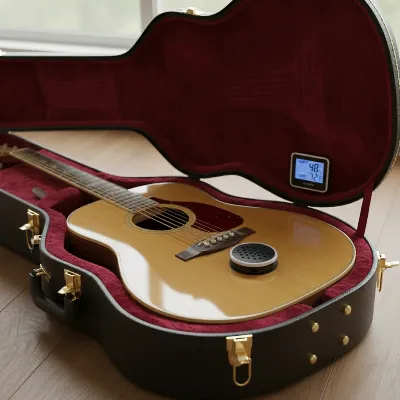 An acoustic guitar stored in a hard case with an in-case humidifier and hygrometer
Cost Considerations for Acoustic Guitar Bridge Repair
The cost of repairing a lifting acoustic guitar bridge can vary depending on several factors, including the severity of the damage, whether it’s a reglue or a full replacement, the luthier’s expertise, and your geographic location.
Factors Influencing Repair Costs
- Severity of Lift: A minor reglue of a partially lifted bridge is typically less expensive than a full bridge replacement where the old bridge is entirely detached or damaged, or if the guitar’s top itself has warped.
- Underlying Issues: If there are additional problems like loose internal braces or a damaged bridge plate, these will add to the overall cost.
- Type of Repair: A simple “reglue” where the existing bridge is reattached is usually cheaper than a “reset” which involves complete removal, thorough cleaning, and refitting. A bridge replacement, especially if a custom bridge needs to be fabricated, will be the most expensive option.
- Luthier’s Rates: Experienced and highly reputable luthiers generally charge more for their specialized skills.
- Geographic Location: Repair costs can fluctuate significantly based on the cost of living and demand for services in your area.
Typical Price Ranges
For a standard acoustic guitar bridge reglue, you can generally expect to pay anywhere from $175 to $280 or more. If the bridge needs to be completely replaced, costs can range from $150 to $500, especially if high-end materials or extensive preparatory work are involved. These prices often include a basic setup after the repair, but additional services for re-finishing or complex underlying damage will incur extra charges. While it might seem like a significant investment, a professionally repaired bridge is essential for the long-term health and playability of your instrument.
Conclusion
A lifting acoustic guitar bridge is more than just a cosmetic flaw; it’s a serious structural issue that demands your attention to preserve the integrity and sound of your instrument. Understanding the common culprits—from environmental shifts and excessive string tension to manufacturing imperfections—empowers you to take proactive steps. While tempting to attempt a quick fix, recognizing the signs of a lifting bridge early and seeking professional repair when necessary is crucial for a lasting solution. By maintaining optimal humidity, using appropriate strings, performing regular inspections, and storing your acoustic guitar properly, you can significantly mitigate the risk of this problem. Invest in the longevity of your musical companion, and it will continue to inspire you with its beautiful sound for years to come. What steps will you take today to ensure your acoustic guitar’s bridge stays firmly in place?
Câu Hỏi Thường Gặp
How critical is it to fix a lifting acoustic guitar bridge immediately?
It is highly critical. A lifting bridge will progressively worsen over time due to constant string tension. Delaying repair can lead to more extensive damage to the guitar’s top, affect its playability, intonation, and tone, and ultimately result in a more costly and complex repair.
Can I use superglue to fix a lifting guitar bridge?
No, superglue (cyanoacrylate) is generally not recommended for fixing a lifting guitar bridge. It creates a brittle bond that is difficult to remove cleanly for future repairs, does not fill gaps effectively, and can damage the guitar’s finish and wood, making a proper repair much harder.
What kind of glue is used for guitar bridge repair?
Professional luthiers typically use strong, reversible wood glues like Titebond Original Wood Glue (aliphatic resin glue) or hide glue. These glues create strong bonds, are stable over time, and can be softened or removed if future repairs are needed without damaging the wood.
How long does it take for a guitar bridge reglue to cure?
The glue for a guitar bridge reglue typically needs to cure under clamping pressure for a minimum of 24 to 48 hours. This allows the adhesive to fully set and achieve its maximum strength, ensuring a durable and lasting bond between the bridge and the guitar top.
Will lighter strings prevent my guitar bridge from lifting?
Using lighter gauge strings can help reduce the overall tension on the guitar’s bridge and soundboard, potentially decreasing the likelihood of a lift. However, it’s not a guaranteed prevention method if other factors like poor humidity control or manufacturing defects are present.
