Many guitarists, whether seasoned players or curious beginners, find themselves pondering the possibility of swapping out their classical guitar’s nylon strings for the bright, resonant sound of steel strings. The idea of coaxing a different voice from a beloved instrument is certainly appealing, but is it a safe or even practical endeavor? While the thought might spark creative ideas, the straightforward answer for most classical guitars is a resounding no, due to fundamental differences in design and the inherent risks involved. This article will delve into why this seemingly simple string change can lead to irreversible damage, explore the critical distinctions between classical and steel-string guitars, and offer safe alternatives for those seeking a different tonal palette.
Understanding the Fundamental Differences Between Classical and Steel-String Guitars
At first glance, classical and steel-string acoustic guitars may appear similar, but beneath their polished exteriors lie crucial structural and design variations. These differences are precisely why each instrument is built for a specific type of string and the tension it generates. Understanding these distinctions is key to appreciating why stringing a classical guitar with steel can be so detrimental.
String Tension: A Critical Distinction
|
Our Picks for the Best Acoustic Guitar in 2026
As an Amazon Associate I earn from qualifying purchases.
|
||
| Num | Product | Action |
|---|---|---|
| 1 | Ashthorpe 38-inch Beginner Acoustic Guitar Package (Blue), Basic Starter Kit w/Gig Bag, Strings, Strap, Tuner, Pitch Pipe, Picks |

|
| 2 | 38inch Wood Acoustic Guitar for Adults, 6 Steel-String Acoustic Guitar With Guitar Bag, Elementary Tutorial of Folk Guitar for Beginners. |
|
| 3 | Joymusic 38 inch sunburst beginner acoustic guitar kit,bundle with a strap with picks holder,digital tuner, set strings, capo,cleaning cloth,6 picks,gig bag.(JG-38C,3TS) |
|
| 4 | Moukey 38" Acoustic Guitar for Beginners Kids Youth Adult Dreadnought Guitarra Acustica Kit with Chord Poster, Gig Bag, Tuner, Picks, Nylon Strings, Capo, Strap - Black |
|
| 5 | Joymusic 38 inch brown beginner acoustic guitar kit,bundle with a strap with picks holder,digital tuner, set strings, capo,cleaning cloth,6 picks,gig bag.(JG-38C,BR) |
|
| 6 | Fender FA-25N 3/4 Size Nylon String Acoustic Guitar, Beginner Guitar, with 2-Year Warranty, Perfect Beginner Guitar for Kids that is Easy on Fingers, Includes 3 Months of Free Lessons, Natural |
|
| 7 | Ashthorpe 41-inch Beginner Cutaway Acoustic Guitar Package (Sunburst), Full Size Basic Starter Kit w/Gig Bag, Strings, Strap, Tuner, Picks |
|
| 8 | Yamaha JR1 FG Junior 3/4 Size Acoustic Guitar, Natural |
|
| 9 | Pyle Beginner Acoustic Guitar Kit, 3/4 Junior Size All Wood Instrument with Full Accessory Kit, Picks, Shoulder Strap, Carry Case, Cleaning Cloth, Tuner App, 2 Month Lessons, 36” (Natural Gloss) |
|
| 10 | Joymusic 38 inch blueburst beginner acoustic guitar kit,bundle with a strap with picks holder,digital tuner, set strings, capo,cleaning cloth,6 picks,gig bag.(JG-38C,BLS) |
|
The most significant factor prohibiting the use of steel strings on a classical guitar is the immense disparity in string tension. A standard set of nylon classical guitar strings typically exerts around 80 to 85 pounds of total tension on the instrument. In stark contrast, a conventional set of steel acoustic guitar strings can pull with approximately 160 to 190 pounds of tension—more than double that of nylon. This dramatically increased force is far beyond what a classical guitar is engineered to withstand, making it the primary cause of potential structural failure.
Structural Integrity: Bracing and Top Thickness
Classical guitars are crafted with a delicate, responsive build to allow the lower tension of nylon strings to vibrate the soundboard effectively. Their internal bracing, often a “fan-style” pattern, is lightweight and strategically placed to enhance resonance and sustain for nylon’s softer tones. The soundboard itself is typically thinner to be more sensitive to these lighter vibrations.
Steel-string acoustic guitars, however, are built like tanks by comparison. They feature robust “X-bracing” patterns, thicker soundboards, and stronger internal construction specifically designed to resist the powerful pull of steel strings. This heavy-duty construction prevents the guitar from collapsing under the intense pressure, a feature absent in classical models.
Neck Reinforcement: The Truss Rod
Another critical difference lies within the guitar’s neck. Steel-string acoustics universally incorporate a truss rod—a metal rod running the length of the neck that can be adjusted to counteract the forward bowing caused by string tension. This allows for precise action adjustments and ensures the neck remains straight and stable.
Most classical guitars, by design, do not have a truss rod. Their necks are constructed to manage the significantly lower tension of nylon strings without the need for additional internal reinforcement. Introducing the high tension of steel strings to such a neck will almost certainly lead to severe and permanent bowing or twisting, making the guitar unplayable.
Bridge Design: Attachment Methods
The bridge, where the strings are anchored to the guitar’s soundboard, also showcases a fundamental design difference. Classical guitars feature a tie-block bridge, where nylon strings are tied directly to the bridge with knots. This design is simple and effective for low-tension nylon.
Steel-string guitars use a pin-bridge system. Steel strings have a ball end that is secured underneath the bridge by bridge pins, anchoring them firmly. The bridge itself is often reinforced internally by a bridge plate to distribute the massive tension across the soundboard. A classical tie-block bridge is simply not engineered to withstand the pulling force of ball-end steel strings, nor the sheer tension.
The Inevitable Risks: What Happens When You Put Steel Strings on a Classical Guitar
Ignoring these fundamental differences and attempting to string a classical guitar with steel strings is akin to putting racing tires on a tractor—it simply won’t work as intended and will likely lead to catastrophic failure. The consequences range from minor damage to the complete destruction of the instrument, often surprisingly quickly.
Damage to the Bridge
One of the most immediate and common points of failure is the bridge. The high tension of steel strings will place immense upward and outward pressure on the classical guitar’s delicate tie-block bridge. This often results in the bridge lifting, detaching, or even ripping clean off the soundboard, leaving unsightly damage and rendering the guitar unplayable. This can happen within hours, days, or weeks of stringing the guitar.
Soundboard Deformation
The soundboard, or top, of a classical guitar is its most resonant and vulnerable component. Under the extreme tension of steel strings, this thinly braced wood will quickly begin to deform. You might observe the top bulging upwards behind the bridge, a condition known as “belly up,” or sinking around the soundhole. This deformation compromises the guitar’s structural integrity, dampens its natural acoustic properties, and can lead to cracks or complete collapse.
Neck Warping and Damage
Without the internal support of a truss rod or the robust construction of a steel-string neck, the classical guitar’s neck is highly susceptible to warping. The relentless pull of steel strings will cause the neck to bow severely, pulling forward and dramatically increasing the string action (the height of the strings above the fretboard). This makes the guitar incredibly difficult, if not impossible, to play. In severe cases, the neck itself can twist or even crack under the strain.
Other Potential Issues
Beyond these major structural failures, other components can suffer. The plastic tuning machine heads on classical guitars are not designed for the abrasive friction or tension of metal strings and can wear out quickly or even crack. Furthermore, the softer fret material typically used on classical guitars can experience accelerated wear from the harder steel strings, leading to grooves and uneven frets that affect playability and intonation.
Why Classical Guitars Use Nylon Strings
The choice of nylon strings for classical guitars is not arbitrary; it’s a centuries-old tradition rooted in musical heritage, tonal preferences, and ergonomic considerations. Nylon (and historically, gut) strings define the unique character of these instruments.
Classical guitars are primarily designed for classical music, flamenco, bossa nova, and certain jazz styles. The warm, mellow, and nuanced tone produced by nylon strings is perfectly suited for these genres, allowing for intricate fingerstyle melodies and rich harmonic textures. Nylon strings also offer a softer feel under the fingertips, making them more forgiving for extended playing sessions and ideal for developing precise fingerpicking techniques without a pick. This lower tension also contributes to the instrument’s intimate volume and sustain, creating a distinct sonic experience that differs greatly from the brighter, louder projection of steel strings.
Seeking the Steel String Sound: Safe Alternatives and Considerations
If you admire the bright tone and powerful projection of steel-string guitars, there are several safe and effective ways to achieve that sound without risking irreparable harm to your classical instrument.
Invest in a Dedicated Steel-String Acoustic Guitar
The most straightforward and recommended solution is to acquire a steel-string acoustic guitar. These instruments are purpose-built to handle the tension and characteristics of steel strings, offering the robust construction, truss rod, and bracing necessary for optimal performance and longevity. There is a vast array of models available, from dreadnoughts and grand auditoriums to smaller parlor guitars, catering to various budgets and playing styles. Owning both a classical and a steel-string guitar allows you to enjoy the best of both worlds, choosing the right instrument for the right sound.
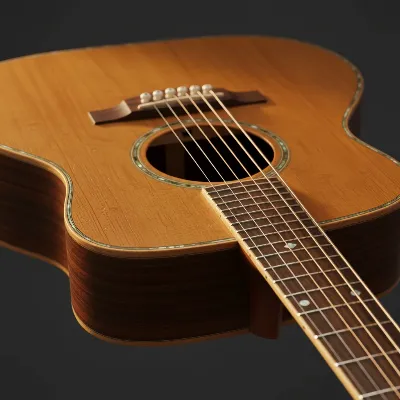 A vibrant steel-string acoustic guitar with a bright finish and clear strings
Explore Hybrid or Crossover Guitars
For players who appreciate the feel of a classical guitar’s wider neck or the playability of nylon strings but desire a sound or aesthetic closer to a steel-string, hybrid or crossover guitars offer an excellent compromise. These instruments typically feature nylon strings but incorporate elements from steel-string acoustics, such as a slightly narrower nut width, a radiused (curved) fretboard, or cutaways for easier access to upper frets. They are designed to provide a “steel-string player’s classical guitar” experience while retaining the warmth and lower tension of nylon. Some may even come with built-in electronics for amplification.
 A modern crossover classical guitar with electronics and a cutaway
Specialized Low-Tension Steel Strings (Use with Extreme Caution)
While generally ill-advised, some niche products exist, such as certain “low-tension steel strings” or “rope core” strings (e.g., Thomastik-Infeld Classic S), marketed for use on classical guitars. These strings are designed to exert significantly less tension than standard steel strings, often closer to that of hard-tension nylon. However, even with these, extreme caution is paramount. It is crucial to verify that your classical guitar’s construction, particularly if it has a truss rod, can safely accommodate even these specialized strings. Always consult with a qualified luthier before attempting this, as the risk of damage, while reduced, is still present, and the resulting tone will still be a classical guitar’s voice, not a true steel-string acoustic.
Conclusion
The allure of a different sound can be powerful, prompting many guitarists to wonder about stringing their classical guitar with steel. However, the foundational differences in construction, particularly the drastic contrast in string tension, make this a highly risky and generally unadvisable DIY modification. Attempting to put steel strings on a classical guitar will almost certainly lead to structural damage, including a warped neck, a lifted bridge, or a deformed soundboard, potentially rendering your cherished instrument irreparable.
To safely explore the world of steel string tones, your best course of action is to respect the distinct engineering of each guitar type. Investing in a dedicated steel-string acoustic or exploring the innovative design of hybrid/crossover guitars will provide the sounds you seek without endangering your instrument. Remember, each guitar is a masterpiece designed for specific strings and musical expressions. Which path will you choose to expand your sonic horizons?
Frequently Asked Questions
What is the main difference in tension between nylon and steel strings?
The primary difference lies in the total pulling force exerted on the guitar. Nylon classical strings generate approximately 80-85 pounds of tension, while steel acoustic strings produce a much higher 160-190 pounds. This significant difference is why classical guitars cannot safely handle steel strings.
Can light gauge steel strings be used on a classical guitar?
Even light gauge steel strings still exert considerably more tension than nylon strings—typically over 100 pounds. While slightly less damaging than heavier gauges, they still pose a substantial risk of warping the neck, lifting the bridge, or deforming the soundboard of a classical guitar. It is strongly not recommended for most classical instruments.
What are crossover guitars?
Crossover or hybrid guitars are instruments designed to blend features of classical and steel-string acoustics. They usually employ nylon strings for a warm tone but incorporate elements like a narrower, radiused neck, which is more familiar to steel-string players. They offer a comfortable playing experience for those transitioning between styles.
How can I tell if my guitar is a classical or steel-string?
A classical guitar typically has nylon strings, a wider, flat fretboard, and a tie-block bridge where strings are tied. Steel-string guitars have steel strings, a narrower, often curved (radiused) fretboard, and a pin-bridge system where strings are secured with bridge pins.
Will putting steel strings on a classical guitar instantly damage it?
Damage may not be instant, but it can occur very rapidly, sometimes within hours or days. The structural components of a classical guitar, such as the bridge, soundboard, and neck, will be under immediate and overwhelming stress, leading to deformation and potential catastrophic failure over a short period.
