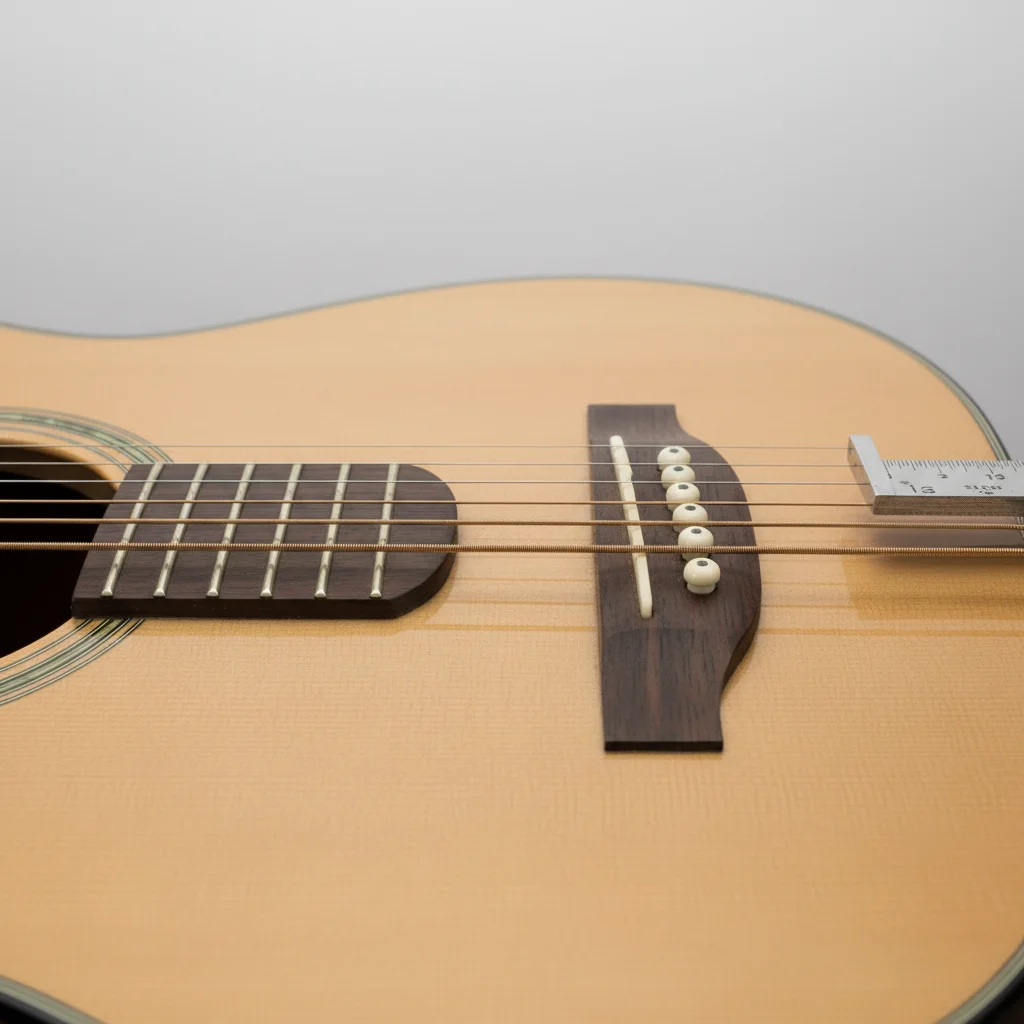
For acoustic guitars, lower action is not always better; an optimal setup typically ranges from 2.0mm to 2.5mm for the low E string and 1.5mm to 2.0mm for the high E string at the 12th fret. While very low action can improve playability, it frequently causes undesirable fret buzz and can negatively impact the instrument’s tone and sustain. Conversely, excessively high action makes the guitar difficult to play, leading to hand fatigue and intonation problems.
Understanding Acoustic Guitar Action
Acoustic guitar action refers to the height of the strings above the fretboard. This measurement significantly impacts playability, tone, and intonation. It’s a delicate balance; even a millimeter too high or too low can drastically alter your playing experience. The ideal action varies based on playing style, string gauge, and the specific guitar’s construction. For instance, a fingerstyle player might prefer a slightly lower action than a heavy strummer to facilitate intricate picking patterns without excessive effort.
Several components influence the action, including the nut height, saddle height, and neck relief. These elements work in conjunction to determine how the strings sit over the frets. Adjusting one without considering the others can lead to new problems, highlighting the importance of a holistic approach to setup. Understanding these interdependencies is crucial for achieving a comfortable and resonant playing experience.
The Pitfalls of Excessively Low Action
While the allure of effortless fretting is strong, pushing the action too low often results in significant drawbacks. The most common issue is fret buzz, where the strings vibrate against the frets, producing an unpleasant rattling sound. This not only detracts from the guitar’s tone but can also be incredibly frustrating for the player. Beyond buzz, an extremely low action can also reduce sustain, as the strings have less room to vibrate freely, and can even lead to choked notes, particularly when bending strings.
Furthermore, an overly low action can sometimes make it harder to achieve proper intonation, especially on guitars with less precise fretwork. The string might be pressed against the fretboard with too much force, causing it to go sharp. It’s a common misconception that the lowest possible action is always the goal; in reality, it’s about finding the sweet spot that balances playability with tonal integrity.
The Disadvantages of High Action
|
Our Picks for the Best Acoustic Guitar in 2026
As an Amazon Associate I earn from qualifying purchases.
|
||
| Num | Product | Action |
|---|---|---|
| 1 | Ashthorpe 38-inch Beginner Acoustic Guitar Package (Blue), Basic Starter Kit w/Gig Bag, Strings, Strap, Tuner, Pitch Pipe, Picks |

|
| 2 | Joymusic 38 inch brown beginner acoustic guitar kit,bundle with a strap with picks holder,digital tuner, set strings, capo,cleaning cloth,6 picks,gig bag.(JG-38C,BR) |
|
| 3 | Fender FA-25N 3/4 Size Nylon String Acoustic Guitar, Beginner Guitar, with 2-Year Warranty, Perfect Beginner Guitar for Kids that is Easy on Fingers, Includes 3 Months of Free Lessons, Natural |
|
| 4 | Joymusic 38 inch sunburst beginner acoustic guitar kit,bundle with a strap with picks holder,digital tuner, set strings, capo,cleaning cloth,6 picks,gig bag.(JG-38C,3TS) |
|
| 5 | Pyle Beginner Acoustic Guitar Kit, 3/4 Junior Size All Wood Instrument with Full Accessory Kit, Picks, Shoulder Strap, Carry Case, Cleaning Cloth, Tuner App, 2 Month Lessons, 36” (Natural Gloss) |
|
| 6 | Yamaha JR1 FG Junior 3/4 Size Acoustic Guitar, Natural |
|
| 7 | Ashthorpe 41-inch Beginner Cutaway Acoustic Guitar Package (Sunburst), Full Size Basic Starter Kit w/Gig Bag, Strings, Strap, Tuner, Picks |
|
| 8 | Joymusic 38 inch blueburst beginner acoustic guitar kit,bundle with a strap with picks holder,digital tuner, set strings, capo,cleaning cloth,6 picks,gig bag.(JG-38C,BLS) |
|
| 9 | 38inch Wood Acoustic Guitar for Adults, 6 Steel-String Acoustic Guitar With Guitar Bag, Elementary Tutorial of Folk Guitar for Beginners. |
|
| 10 | Moukey 38" Acoustic Guitar for Beginners Kids Youth Adult Dreadnought Guitarra Acustica Kit with Chord Poster, Gig Bag, Tuner, Picks, Nylon Strings, Capo, Strap - Black |
|
On the other end of the spectrum, an action that is too high presents its own set of challenges. The primary complaint from players is the increased effort required to press down the strings, leading to hand and finger fatigue, especially during extended playing sessions. This can be a significant barrier for beginners and can hinder the development of proper technique.
High action also negatively impacts intonation. As you press down on the strings, the increased tension can cause the notes to go sharp, making chords sound out of tune, particularly further up the neck. Additionally, a high action can make fast playing and complex chord shapes more difficult to execute cleanly. While some players, particularly those who play slide guitar, might intentionally opt for a higher action, for most acoustic guitarists, it’s a hindrance.
Factors Influencing Optimal Action
Determining the optimal action for your acoustic guitar involves considering several key factors. Your personal playing style is paramount; a light touch fingerstyle player will likely prefer a different setup than a heavy flatpicker. The gauge of strings you use also plays a role; heavier gauge strings often require a slightly higher action to prevent buzzing due to their greater vibrational amplitude. The specific model and construction of your guitar are also important, as different brands and designs have varying tolerances and characteristics.
Ultimately, the best action is subjective and comes down to personal preference and comfort. It’s a balance between ease of playability, clear tone, and minimal fret buzz. Experimentation and minor adjustments are often necessary to find what works best for you and your instrument. Many players find that a professional setup can make a significant difference in unlocking their guitar’s full potential.
- Playing Style: Fingerstyle, strumming, or hybrid picking.
- String Gauge: Light, medium, or heavy strings.
- Neck Relief: The slight forward bow of the neck.
- Nut Height: How high the strings sit at the headstock.
- Saddle Height: How high the strings sit at the bridge.
Achieving Your Ideal Acoustic Guitar Action
Achieving your ideal acoustic guitar action often involves a combination of adjustments to the nut, saddle, and neck relief. For most players, a professional setup by a qualified luthier is the most reliable way to ensure these components are perfectly balanced. They have the tools and expertise to make precise adjustments that can dramatically improve your guitar’s playability and sound. However, some basic adjustments can be made at home if you’re comfortable with DIY guitar maintenance.
Adjusting the truss rod can alter neck relief, which in turn affects action. Lowering the saddle can reduce string height at the bridge, while filing the nut slots can lower the strings at the headstock. It’s crucial to make small, incremental adjustments and to check your progress frequently to avoid over-correcting. Remember, the goal isn’t just low action, but an action that allows for comfortable playing without sacrificing tone or introducing buzz. Consider investing in a good quality string action gauge to accurately measure your adjustments.This tool is indispensable for precise setup work. For those looking to upgrade their saddle for better tone and action, a high-quality bone saddle can make a noticeable difference.
Frequently Asked Questions
What is the ideal string height for an acoustic guitar?
The ideal string height for an acoustic guitar typically ranges from 2.0mm to 2.5mm for the low E string and 1.5mm to 2.0mm for the high E string, measured at the 12th fret. This range balances playability with optimal tone and sustain, minimizing fret buzz.
Why is excessively low action bad for an acoustic guitar?
Excessively low action on an acoustic guitar often leads to significant fret buzz, where strings rattle against frets, producing an unpleasant sound. It can also reduce sustain, as strings have less room to vibrate freely, and may cause choked notes when bending.
How does high action affect acoustic guitar playability?
High action makes an acoustic guitar difficult to play, requiring increased effort to press down strings, which causes hand and finger fatigue. It also negatively impacts intonation, making notes sound sharp, and hinders fast playing or complex chord shapes.
What factors influence the optimal action for an acoustic guitar?
Optimal acoustic guitar action is influenced by playing style (fingerstyle vs. strumming), string gauge (heavier strings may need higher action), and the specific guitar's construction. Personal preference and comfort are also crucial in finding the right balance.
Can I adjust my acoustic guitar's action myself?
Yes, you can make basic adjustments to your acoustic guitar's action at home by altering the truss rod for neck relief, lowering the saddle, or filing nut slots. It's crucial to make small, incremental adjustments and use a string action gauge for accuracy.
Achieve Ideal Acoustic Guitar Action
Adjusting your acoustic guitar's action involves balancing string height for playability, tone, and minimal fret buzz. This guide outlines key steps for a comfortable and resonant playing experience.
Familiarize yourself with the nut height, saddle height, and neck relief, as these components collectively determine string height. Adjusting one without considering the others can lead to new problems, so a holistic approach is essential.
Use a string action gauge to accurately measure your guitar's current string height at the 12th fret. Aim for 2.0mm-2.5mm for the low E string and 1.5mm-2.0mm for the high E string as a starting point for optimal action.
Adjust the truss rod to achieve the correct neck relief, which is the slight forward bow of the neck. This adjustment significantly impacts action and should be done carefully, making small turns and rechecking frequently.
If the action is too high, carefully lower the saddle by sanding its bottom or replacing it with a shorter one. For action that is too low, a new, taller saddle may be required. Make sure to maintain proper intonation.
If strings are too high at the headstock, the nut slots may need to be filed down. This is a delicate process best done by a professional to avoid cutting too deep, which can cause buzzing at the open strings.

This was super helpful for understanding why my new guitar felt off. I’m a fingerstyle player, and I was trying to get the action as low as possible, which was causing some serious intonation issues. Realizing that the ideal action varies based on playing style made a lot of sense. I’ve made some minor adjustments, and it’s already feeling much better for my technique.
I always thought lower action was the holy grail, but this really opened my eyes. My old dreadnought was buzzing like crazy, and I just assumed it was the guitar. After reading about the optimal setup of 2.0mm to 2.5mm for the low E, I adjusted it slightly higher, and the tone is so much richer now. No more fret buzz, and it still feels great to play. Huge difference!
Good info on the general principles. I was hoping for a bit more detail on how string gauge specifically affects the ideal action. It mentions it briefly, but I’m still a little unsure if my heavy gauge strings need a different approach than what’s suggested for the high E string at 1.5mm to 2.0mm. Still, it’s a solid starting point for anyone struggling with their setup.
My hands were getting so fatigued trying to play my acoustic, and I couldn’t figure out why. I thought I just needed to build up more strength. Turns out, my action was excessively high, just like it mentioned. After a proper setup, it’s like a completely different instrument. I can play for much longer now without any discomfort. Thanks for the clear explanation!