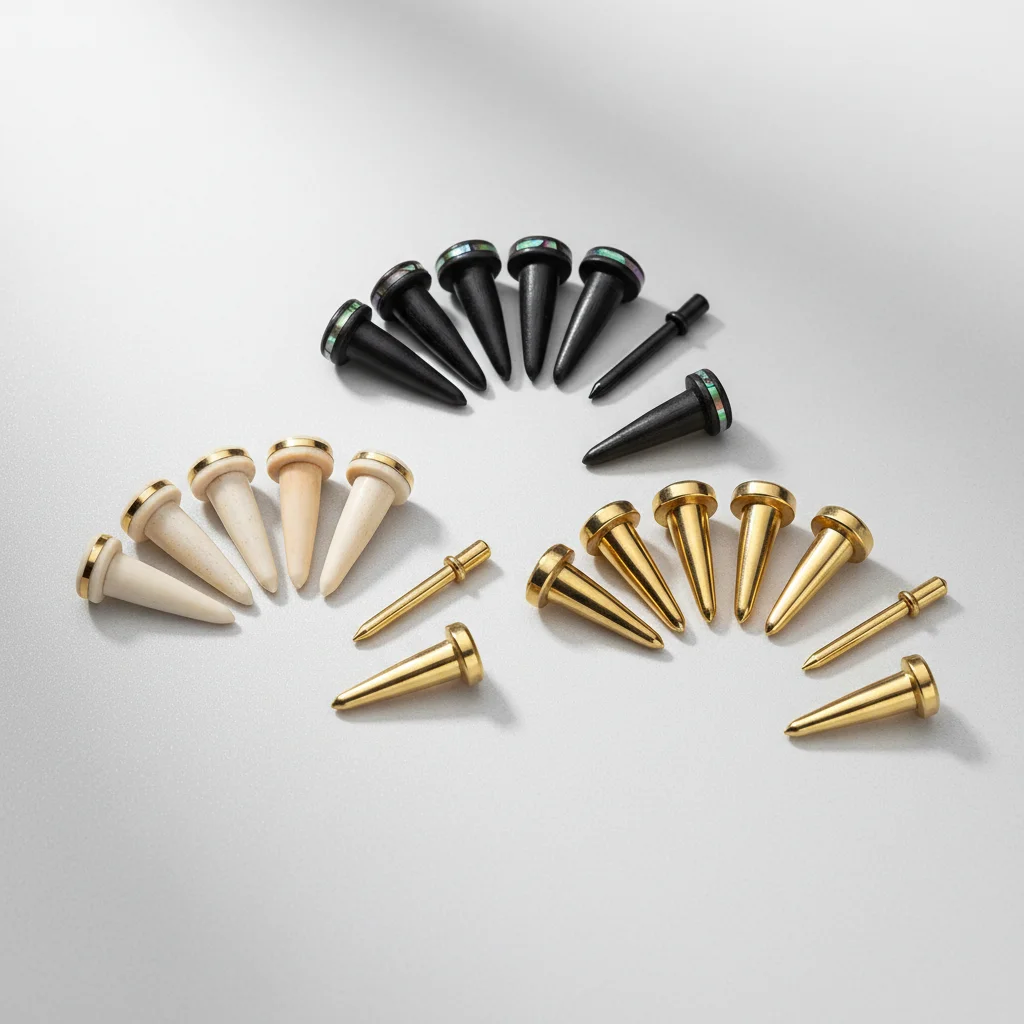
Acoustic guitar bridge pins significantly affect your instrument’s tone, with their material and fit directly influencing sustain, clarity, and overall resonance. These small components are crucial for transferring string vibrations to the guitar’s soundboard, and changing their composition can lead to a noticeable sonic difference in brightness, warmth, or sustain.
Understanding the Function of Bridge Pins
Bridge pins are not just decorative; their primary function is to secure the strings at the bridge and transfer string energy to the guitar’s top. When a string is plucked, its vibrations travel down to the bridge, through the saddle, and into the bridge pins. These pins then transmit the vibrations to the bridge plate and ultimately to the soundboard, which amplifies the sound. The material of the pin affects how efficiently and completely this energy transfer occurs.
Different materials have varying densities and resonant properties. For instance, a denser material might offer more sustain, while a lighter material could enhance brightness. The fit of the pin in the bridge hole is also critical; a loose pin can dampen vibrations, leading to a weaker tone, whereas a snug fit ensures optimal energy transfer.
Common Bridge Pin Materials and Their Tonal Impact
There are several common materials used for acoustic guitar bridge pins, each imparting distinct tonal characteristics. Plastic pins, often found on entry-level guitars, tend to be the least resonant, sometimes resulting in a duller sound. Ebony and rosewood pins, popular choices, offer a warm, balanced tone with good sustain. Bone pins are known for their excellent density and hardness, contributing to increased clarity, sustain, and brightness. Brass pins can add significant sustain and a metallic brightness, while Tusq (a synthetic ivory substitute) provides a consistent, bright, and articulate tone, often enhancing harmonics.
- Plastic: Generally less resonant, can lead to a duller sound.
- Ebony/Rosewood: Warm, balanced tone with good sustain.
- Bone: Increased clarity, sustain, and brightness due to density.
- Brass: Adds significant sustain and a metallic brightness.
- Tusq: Consistent, bright, articulate tone, enhances harmonics.
The Importance of Proper Fit and Installation
|
Our Picks for the Best Acoustic Guitar in 2026
As an Amazon Associate I earn from qualifying purchases.
|
||
| Num | Product | Action |
|---|---|---|
| 1 | Joymusic 38 inch brown beginner acoustic guitar kit,bundle with a strap with picks holder,digital tuner, set strings, capo,cleaning cloth,6 picks,gig bag.(JG-38C,BR) |

|
| 2 | Moukey 38" Acoustic Guitar for Beginners Kids Youth Adult Dreadnought Guitarra Acustica Kit with Chord Poster, Gig Bag, Tuner, Picks, Nylon Strings, Capo, Strap - Black |
|
| 3 | Joymusic 38 inch sunburst beginner acoustic guitar kit,bundle with a strap with picks holder,digital tuner, set strings, capo,cleaning cloth,6 picks,gig bag.(JG-38C,3TS) |
|
| 4 | Joymusic 38 inch blueburst beginner acoustic guitar kit,bundle with a strap with picks holder,digital tuner, set strings, capo,cleaning cloth,6 picks,gig bag.(JG-38C,BLS) |
|
| 5 | Yamaha JR1 FG Junior 3/4 Size Acoustic Guitar, Natural |
|
| 6 | Ashthorpe 41-inch Beginner Cutaway Acoustic Guitar Package (Sunburst), Full Size Basic Starter Kit w/Gig Bag, Strings, Strap, Tuner, Picks |
|
| 7 | Pyle Beginner Acoustic Guitar Kit, 3/4 Junior Size All Wood Instrument with Full Accessory Kit, Picks, Shoulder Strap, Carry Case, Cleaning Cloth, Tuner App, 2 Month Lessons, 36” (Natural Gloss) |
|
| 8 | 38inch Wood Acoustic Guitar for Adults, 6 Steel-String Acoustic Guitar With Guitar Bag, Elementary Tutorial of Folk Guitar for Beginners. |
|
| 9 | Fender FA-25N 3/4 Size Nylon String Acoustic Guitar, Beginner Guitar, with 2-Year Warranty, Perfect Beginner Guitar for Kids that is Easy on Fingers, Includes 3 Months of Free Lessons, Natural |
|
| 10 | Ashthorpe 38-inch Beginner Acoustic Guitar Package (Blue), Basic Starter Kit w/Gig Bag, Strings, Strap, Tuner, Pitch Pipe, Picks |
|
Beyond the material, the fit of the bridge pin in the bridge hole is paramount for optimal tone. A pin that is too loose will not effectively transfer string energy, leading to a loss of volume and sustain. Conversely, a pin that is too tight can damage the bridge or the pin itself. The pin should sit snugly, with the ball end of the string resting against the bridge plate, not the pin itself. Proper installation involves ensuring the string’s ball end is correctly seated against the bridge plate before pushing the pin in.
Incorrectly installed pins can also lead to string breakage or damage to the bridge plate over time. It’s always recommended to check the seating of the ball end through the soundhole to ensure it’s not caught on the pin, which can cause the pin to sit improperly or even pop out under tension.
Upgrading Your Bridge Pins: What to Expect
Upgrading your acoustic guitar bridge pins can be a cost-effective way to modify your guitar’s tone without major alterations. Many players report a noticeable improvement in sustain, clarity, and overall resonance after switching from plastic to bone, Tusq, or high-quality wood pins. The specific change you experience will depend on your guitar’s existing components and your desired tonal outcome. For example, if your guitar sounds a bit muddy, bone pins might add the clarity you’re looking for.
When choosing new pins, consider the material that best complements your guitar’s natural sound and your playing style. It’s also important to ensure the new pins are the correct size and taper for your guitar’s bridge holes. While the change might be subtle to some, many discerning ears will appreciate the enhanced sonic characteristics.
Frequently Asked Questions
How do acoustic guitar bridge pins affect the instrument's tone?
Acoustic guitar bridge pins affect tone by transferring string vibrations to the soundboard. Their material and fit directly influence sustain, clarity, and overall resonance. For example, denser materials like bone can increase clarity and brightness.
What are the common materials for bridge pins and their tonal characteristics?
Common bridge pin materials include plastic (duller sound), ebony/rosewood (warm, balanced tone), bone (increased clarity, sustain, brightness), brass (significant sustain, metallic brightness), and Tusq (consistent, bright, articulate tone). Each material has unique density and resonant properties.
Why is the proper fit of bridge pins important for guitar tone?
The proper fit of bridge pins is crucial because it ensures optimal transfer of string energy to the soundboard. A loose pin dampens vibrations, leading to a loss of volume and sustain, while a snug fit maximizes energy transfer for a stronger tone.
Can upgrading bridge pins improve an acoustic guitar's sound?
Yes, upgrading bridge pins can be a cost-effective way to improve an acoustic guitar's sound. Many players report noticeable improvements in sustain, clarity, and overall resonance when switching from plastic to higher-quality materials like bone or Tusq.
What should I consider when choosing new bridge pins for my guitar?
When choosing new bridge pins, consider the material that complements your guitar's natural sound and playing style, such as bone for clarity or ebony for warmth. Also, ensure the new pins are the correct size and taper for your guitar's bridge holes to guarantee a proper fit.

I’ve been playing for years and never really considered the impact of bridge pins beyond just keeping the strings in place. The explanation about energy transfer to the soundboard really made sense. I swapped out my old plastic pins for some ebony ones, and while the change wasn’t dramatic, there’s a subtle warmth now that I really appreciate. Good info!
I always thought bridge pins were just for holding strings, but after reading about how different materials affect tone, I decided to try some bone pins on my dreadnought. The difference in sustain and clarity is genuinely noticeable. It’s like my guitar woke up! Definitely worth the upgrade if you’re looking to fine-tune your sound.
I was curious about how bridge pins affect tone, especially with the mention of brightness and warmth. I tried a set of brass pins hoping for more brightness on my older parlor guitar. While they did add a bit of zing, I found them a little too heavy and they didn’t fit quite as snugly as I’d hoped. Still, it was an interesting experiment.
This really broke down the science behind bridge pins and their effect on resonance. I had some old, worn-out plastic pins on my Taylor, and after replacing them with Tusq, the improvement in overall resonance and clarity was immediate. It’s a small change that makes a big difference for such a crucial component.