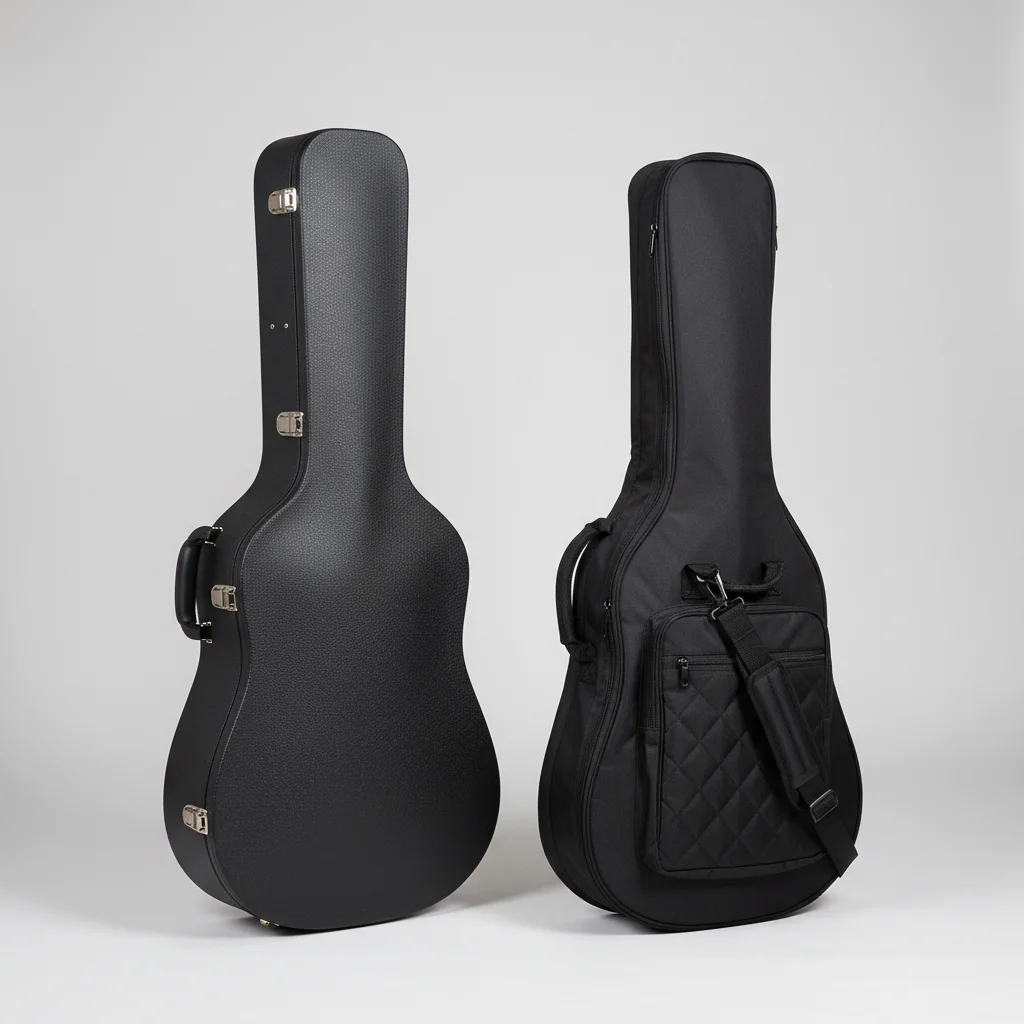
Choosing between a hard shell case and a gig bag for an acoustic guitar depends on the level of protection and portability required. A hard shell case offers significantly superior safeguarding against impacts, temperature fluctuations, and humidity changes, making it the better choice for long-term storage and frequent travel. Gig bags prioritize convenience and portability, providing lighter protection suitable for local transport.
Understanding Hard Shell Cases
Hard shell cases are constructed from rigid materials like wood, ABS plastic, or fiberglass, providing a robust exterior that can withstand considerable force. Internally, they feature plush lining and often custom-molded interiors to securely cradle the guitar, preventing movement and absorbing shocks. This durable construction makes them ideal for air travel, touring, or any situation where your guitar might be exposed to rough handling. The sealed nature of many hard cases also helps maintain a more stable internal environment, which is vital for preserving the wood of an acoustic guitar.
Beyond physical protection, hard shell cases often include lockable latches, adding a layer of security against theft. They are heavier and bulkier than gig bags, which can be a consideration for daily commutes, but the peace of mind they offer in terms of instrument safety is often worth the trade-off. Many professional musicians and serious hobbyists opt for hard cases for their primary instruments due to their unparalleled protective qualities.
Exploring Gig Bags
Gig bags, conversely, are made from softer, padded fabrics like nylon or polyester. They are designed for convenience and portability, offering a lightweight solution for carrying your guitar to rehearsals, lessons, or local gigs. While they provide some cushioning against minor bumps and scratches, they offer minimal protection against significant impacts, crushing forces, or extreme environmental changes. The level of padding varies greatly among gig bags, with some higher-end models featuring thicker foam and reinforced areas.
The main advantages of gig bags are their light weight, ease of transport (often with backpack straps), and additional storage pockets for accessories like picks, tuners, and sheet music. They are also generally more affordable than hard shell cases. However, for valuable instruments or situations where robust protection is paramount, a gig bag is a compromise that might not be worth the risk.
Key Differences in Protection and Portability
|
Our Picks for the Best Acoustic Guitar in 2026
As an Amazon Associate I earn from qualifying purchases.
|
||
| Num | Product | Action |
|---|---|---|
| 1 | Yamaha JR1 FG Junior 3/4 Size Acoustic Guitar, Natural |

|
| 2 | Fender FA-25N 3/4 Size Nylon String Acoustic Guitar, Beginner Guitar, with 2-Year Warranty, Perfect Beginner Guitar for Kids that is Easy on Fingers, Includes 3 Months of Free Lessons, Natural |
|
| 3 | Ashthorpe 41-inch Beginner Cutaway Acoustic Guitar Package (Sunburst), Full Size Basic Starter Kit w/Gig Bag, Strings, Strap, Tuner, Picks |
|
| 4 | Joymusic 38 inch brown beginner acoustic guitar kit,bundle with a strap with picks holder,digital tuner, set strings, capo,cleaning cloth,6 picks,gig bag.(JG-38C,BR) |
|
| 5 | Moukey 38" Acoustic Guitar for Beginners Kids Youth Adult Dreadnought Guitarra Acustica Kit with Chord Poster, Gig Bag, Tuner, Picks, Nylon Strings, Capo, Strap - Black |
|
| 6 | Pyle Beginner Acoustic Guitar Kit, 3/4 Junior Size All Wood Instrument with Full Accessory Kit, Picks, Shoulder Strap, Carry Case, Cleaning Cloth, Tuner App, 2 Month Lessons, 36” (Natural Gloss) |
|
| 7 | Ashthorpe 38-inch Beginner Acoustic Guitar Package (Blue), Basic Starter Kit w/Gig Bag, Strings, Strap, Tuner, Pitch Pipe, Picks |
|
| 8 | Joymusic 38 inch sunburst beginner acoustic guitar kit,bundle with a strap with picks holder,digital tuner, set strings, capo,cleaning cloth,6 picks,gig bag.(JG-38C,3TS) |
|
| 9 | Joymusic 38 inch blueburst beginner acoustic guitar kit,bundle with a strap with picks holder,digital tuner, set strings, capo,cleaning cloth,6 picks,gig bag.(JG-38C,BLS) |
|
| 10 | 38inch Wood Acoustic Guitar for Adults, 6 Steel-String Acoustic Guitar With Guitar Bag, Elementary Tutorial of Folk Guitar for Beginners. |
|
The fundamental difference between hard shell cases and gig bags lies in their protective capabilities and portability. Hard cases excel in impact resistance, offering a rigid barrier that can prevent serious damage from drops or crushing. They also provide better insulation against temperature and humidity fluctuations, which are critical for maintaining the structural integrity and playability of an acoustic guitar. Gig bags, while convenient, offer only limited protection against these threats.
Conversely, gig bags are significantly more portable. Their lighter weight and often ergonomic designs (like backpack straps) make them much easier to carry for extended periods, especially for those who walk or use public transport. Hard cases, while offering superior protection, can be cumbersome and heavy, making them less ideal for casual, short-distance transport.
When to Choose Each Option
The choice between a hard shell case and a gig bag ultimately depends on your specific needs and how you use and transport your acoustic guitar. Consider the following scenarios:
- Choose a Hard Shell Case if:
- You frequently travel by air or ship your guitar.
- Your guitar is a valuable or vintage instrument.
- You need maximum protection against impacts, drops, and environmental changes.
- You store your guitar for long periods and want to maintain stable conditions.
- You need enhanced security with lockable latches.
Conversely, a gig bag might be suitable if:
- You only transport your guitar short distances, such as to local lessons or rehearsals.
- You prioritize light weight and ease of carrying.
- Your budget is a significant concern.
- Your guitar is a less expensive model where minor damage is less critical.
For optimal protection, especially for higher-end acoustic guitars, a hard shell case is almost always the recommended choice. While a gig bag offers convenience, it simply cannot match the robust safeguarding provided by a rigid case. Investing in a quality hard shell case is an investment in the longevity and safety of your instrument.For those who need a balance of portability and decent protection, some manufacturers offer hybrid cases that combine elements of both, providing a semi-rigid structure.
Frequently Asked Questions
What is the main difference between a hard shell case and a gig bag?
The main difference is protection level and portability. Hard shell cases offer rigid, superior protection against impacts and environmental factors, while gig bags provide lighter cushioning and are more portable for short distances.
When should I choose a hard shell case for my acoustic guitar?
You should choose a hard shell case if you frequently travel by air, ship your guitar, own a valuable or vintage instrument, or need maximum protection against impacts, drops, and environmental changes. They also offer enhanced security with lockable latches.
What are the primary benefits of using a gig bag for an acoustic guitar?
The primary benefits of a gig bag are its light weight, ease of transport (often with backpack straps), and additional storage pockets for accessories. They are also generally more affordable than hard shell cases, making them suitable for local transport and less expensive guitars.
Do hard shell cases protect against humidity and temperature changes?
Yes, many hard shell cases are designed with sealed constructions that help maintain a more stable internal environment. This feature is crucial for protecting the wood of an acoustic guitar from damaging humidity and temperature fluctuations.
Are gig bags suitable for air travel with an acoustic guitar?
No, gig bags are not suitable for air travel. They offer minimal protection against significant impacts and crushing forces, which are common risks during airline baggage handling. A hard shell case is strongly recommended for air travel to ensure instrument safety.

I got a hard shell case made from ABS plastic, and while it’s super sturdy, it’s also pretty heavy. I travel a lot for work and sometimes just need something lighter for short hops. It’s great for air travel, but I wish it was a bit less cumbersome for everyday use. Still, the protection is top-notch.
I’ve always been a gig bag person for the convenience and portability, especially for just going to practice. However, the point about humidity changes really hit home. I’m considering a hard shell for long-term storage now, even if I still use my gig bag for quick trips. It’s a good balance.
I used to just throw my guitar in a cheap gig bag for local gigs, but after reading about the superior safeguarding of hard shell cases, I finally invested in one. The peace of mind knowing my dreadnought is protected from impacts and temperature changes is huge. It’s definitely bulkier, but worth it for the protection.
My old gig bag just wasn’t cutting it anymore, especially with the mention of rough handling during touring. I upgraded to a fiberglass hard shell case and the difference is night and day. The plush lining and custom-molded interior really keep my guitar secure. No more worrying about dings!