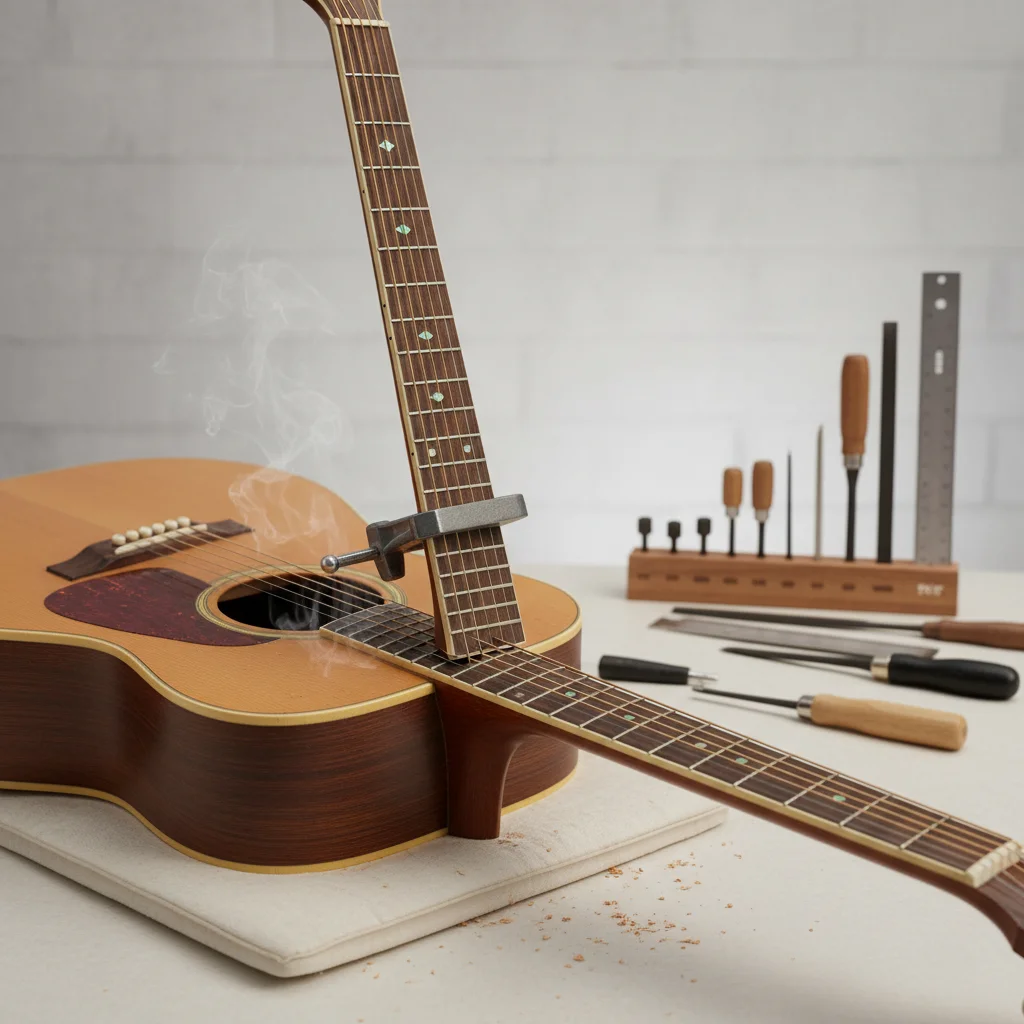
An acoustic guitar neck reset is a significant repair that can restore playability and tone to an older instrument, and it is often a worthwhile investment for guitars with sentimental value or those from reputable manufacturers. This complex procedure addresses issues like high action and poor intonation that arise when the neck angle shifts over time, typically due to string tension and environmental factors. While the cost can be substantial, a successful neck reset can extend the life of a cherished acoustic guitar by decades, making it a sound decision for many owners.
Understanding Why a Neck Reset Becomes Necessary
Over years of string tension and changes in humidity, the wooden components of an acoustic guitar can shift. Specifically, the neck angle can become too shallow relative to the bridge, causing the strings to sit too high above the fretboard, even with the saddle lowered as much as possible. This condition, often referred to as a ‘neck hump’ or ‘belly bulge’ behind the bridge, makes the guitar difficult to play and can negatively impact its intonation and overall resonance. A neck reset corrects this geometry by carefully detaching the neck from the body, adjusting the angle, and reattaching it securely. For compare top acoustic guitar on this site.
Ignoring the signs of a poor neck angle can lead to further problems, including increased stress on the bridge and top of the guitar. While minor adjustments like saddle shaving can offer temporary relief, they don’t address the root cause. A neck reset is a permanent solution that restores the guitar to its intended playing condition, allowing for proper action and intonation across the entire fretboard.
The Neck Reset Process: What to Expect
The process of an acoustic guitar neck reset is intricate and requires specialized tools and expertise. It typically begins with removing the frets closest to the body to access the neck joint. Steam is then carefully injected into the joint to soften the glue, allowing the luthier to separate the neck from the body without damaging the wood. Once separated, the heel of the neck is precisely reshaped to achieve the correct angle. This often involves removing a small amount of wood from the heel and sometimes from the neck block inside the guitar body.
After the angle is adjusted, the neck is dry-fitted to ensure a perfect alignment. Once confirmed, the neck is re-glued to the body using strong, appropriate adhesives. The final steps involve re-fretting the affected area, setting up the guitar with new strings, and making any necessary adjustments to the saddle and nut to achieve optimal playability. This meticulous work ensures the guitar not only plays better but also maintains its structural integrity.
Cost and Value: Is It a Smart Investment?
|
Our Picks for the Best Acoustic Guitar in 2026
As an Amazon Associate I earn from qualifying purchases.
|
||
| Num | Product | Action |
|---|---|---|
| 1 | Joymusic 38 inch blueburst beginner acoustic guitar kit,bundle with a strap with picks holder,digital tuner, set strings, capo,cleaning cloth,6 picks,gig bag.(JG-38C,BLS) |

|
| 2 | Joymusic 38 inch sunburst beginner acoustic guitar kit,bundle with a strap with picks holder,digital tuner, set strings, capo,cleaning cloth,6 picks,gig bag.(JG-38C,3TS) |
|
| 3 | Yamaha JR1 FG Junior 3/4 Size Acoustic Guitar, Natural |
|
| 4 | Ashthorpe 41-inch Beginner Cutaway Acoustic Guitar Package (Sunburst), Full Size Basic Starter Kit w/Gig Bag, Strings, Strap, Tuner, Picks |
|
| 5 | Pyle Beginner Acoustic Guitar Kit, 3/4 Junior Size All Wood Instrument with Full Accessory Kit, Picks, Shoulder Strap, Carry Case, Cleaning Cloth, Tuner App, 2 Month Lessons, 36” (Natural Gloss) |
|
| 6 | Moukey 38" Acoustic Guitar for Beginners Kids Youth Adult Dreadnought Guitarra Acustica Kit with Chord Poster, Gig Bag, Tuner, Picks, Nylon Strings, Capo, Strap - Black |
|
| 7 | 38inch Wood Acoustic Guitar for Adults, 6 Steel-String Acoustic Guitar With Guitar Bag, Elementary Tutorial of Folk Guitar for Beginners. |
|
| 8 | Fender FA-25N 3/4 Size Nylon String Acoustic Guitar, Beginner Guitar, with 2-Year Warranty, Perfect Beginner Guitar for Kids that is Easy on Fingers, Includes 3 Months of Free Lessons, Natural |
|
| 9 | Joymusic 38 inch brown beginner acoustic guitar kit,bundle with a strap with picks holder,digital tuner, set strings, capo,cleaning cloth,6 picks,gig bag.(JG-38C,BR) |
|
| 10 | Ashthorpe 38-inch Beginner Acoustic Guitar Package (Blue), Basic Starter Kit w/Gig Bag, Strings, Strap, Tuner, Pitch Pipe, Picks |
|
The cost of an acoustic guitar neck reset can vary significantly depending on the luthier’s experience, the complexity of the guitar’s construction, and your geographic location. Generally, you can expect to pay anywhere from $300 to $600 for this service. While this might seem like a substantial amount, consider it in the context of the guitar’s value and your attachment to it. For a vintage instrument, a high-end model, or a guitar with deep sentimental value, a neck reset is almost always a worthwhile investment that preserves its playability and market value.
For less expensive, entry-level guitars, the cost of a neck reset might approach or even exceed the guitar’s original purchase price. In such cases, it’s important to weigh the emotional attachment against the financial practicality. Sometimes, it might be more economical to consider a new instrument. However, for many guitarists, the ability to continue playing a beloved instrument with renewed comfort and tone makes the investment entirely justified.
Signs Your Acoustic Guitar Needs a Neck Reset
- High action that cannot be corrected by lowering the saddle.
- Insufficient saddle height remaining to lower the action further.
- A visible ‘hump’ or bulge in the guitar’s top behind the bridge.
- Poor intonation, especially in the upper frets, despite proper setup.
- Difficulty playing chords and single notes due to excessive string height.
Choosing the Right Luthier for the Job
Selecting a qualified luthier is paramount for a successful neck reset. This is not a repair for an amateur or a general repair shop; it requires specialized knowledge of acoustic guitar construction and precise woodworking skills. Look for luthiers with extensive experience in structural guitar repairs, specifically neck resets. Ask for references, view examples of their work, and discuss the process in detail before committing. A reputable luthier will provide a clear estimate and explain the steps involved, ensuring you are comfortable with the procedure.
A well-executed neck reset by a skilled professional can breathe new life into an aging acoustic guitar, restoring its playability and tone for many more years of enjoyment. It’s an investment in the longevity and performance of your instrument.Consider also investing in a high-quality humidifier to prevent future wood movement.
Frequently Asked Questions
What is an acoustic guitar neck reset?
An acoustic guitar neck reset is a major repair that corrects the neck angle relative to the guitar body. This procedure restores proper string height, playability, and intonation, which often degrade over time due to string tension and environmental factors.
How much does an acoustic guitar neck reset cost?
The cost for an acoustic guitar neck reset generally ranges from $300 to $600. This price can vary based on the luthier's experience, the complexity of the guitar's construction, and the geographic location of the repair shop.
When should I consider a neck reset for my acoustic guitar?
You should consider a neck reset if your acoustic guitar has persistently high action that cannot be corrected by lowering the saddle, poor intonation in the upper frets, or a visible 'hump' behind the bridge. These are signs of an incorrect neck angle.
Is a neck reset a permanent solution for high action?
Yes, a neck reset is considered a permanent solution for high action caused by an incorrect neck angle. Unlike temporary fixes like saddle shaving, it addresses the root cause by physically adjusting the neck's geometry, restoring the guitar to its intended playing condition for decades.
Can any guitar repair shop perform a neck reset?
No, a neck reset requires specialized knowledge and tools, making it a job for an experienced luthier rather than a general repair shop. Look for professionals with extensive experience in structural guitar repairs and specific expertise in neck resets.
Performing an Acoustic Guitar Neck Reset
An acoustic guitar neck reset is a complex repair that restores proper neck angle, playability, and intonation. This procedure involves carefully detaching, reshaping, and reattaching the guitar's neck.
Begin by removing the frets closest to the guitar body to gain access to the neck joint. This step is crucial for safely separating the neck without damaging the fretboard or surrounding wood.
Carefully inject steam into the neck joint to soften the glue. This allows the luthier to gently detach the neck from the guitar body. Precision is key here to prevent any damage to the wood components.
Once separated, precisely reshape the heel of the neck to achieve the correct angle relative to the guitar body. This often involves removing a small amount of wood from the heel or the internal neck block to ensure optimal alignment.
Dry-fit the neck to confirm perfect alignment before re-gluing it to the body with strong adhesives. The final steps include re-fretting the affected area, setting up the guitar with new strings, and making necessary adjustments to the saddle and nut for optimal playability and intonation.

I had a neck reset done on my Guild D-55 a few months ago. While the high action issue is definitely resolved, and it plays much better, the cost was pretty substantial. I’m happy with the result overall, but it’s definitely something to consider carefully if your guitar isn’t a high-end model or doesn’t have a lot of personal history.
My grandfather’s old Yamaha FG-180 was practically unplayable due to the neck angle issues. I was worried about the complexity of the procedure, but a good luthier made all the difference. It’s amazing how much better the intonation is now, and it’s brought new life to a guitar that means the world to me. Highly recommend for older instruments.
My old Gibson J-45 was starting to show those classic signs of a shifting neck angle, making it really hard to fret chords cleanly. After reading up on the procedure, I decided to take the plunge. The difference is night and day; the playability is restored, and it feels great. It’s a big investment, but for a guitar with sentimental value, it’s a no-brainer.
I had my vintage Martin D-28 reset last year, and it was absolutely worth every penny. The action was getting so high it was almost unplayable, even after trying different saddle heights. Now it plays like new, the intonation is spot on, and the tone is just incredible. If you’re on the fence about this for a cherished instrument, I say go for it.