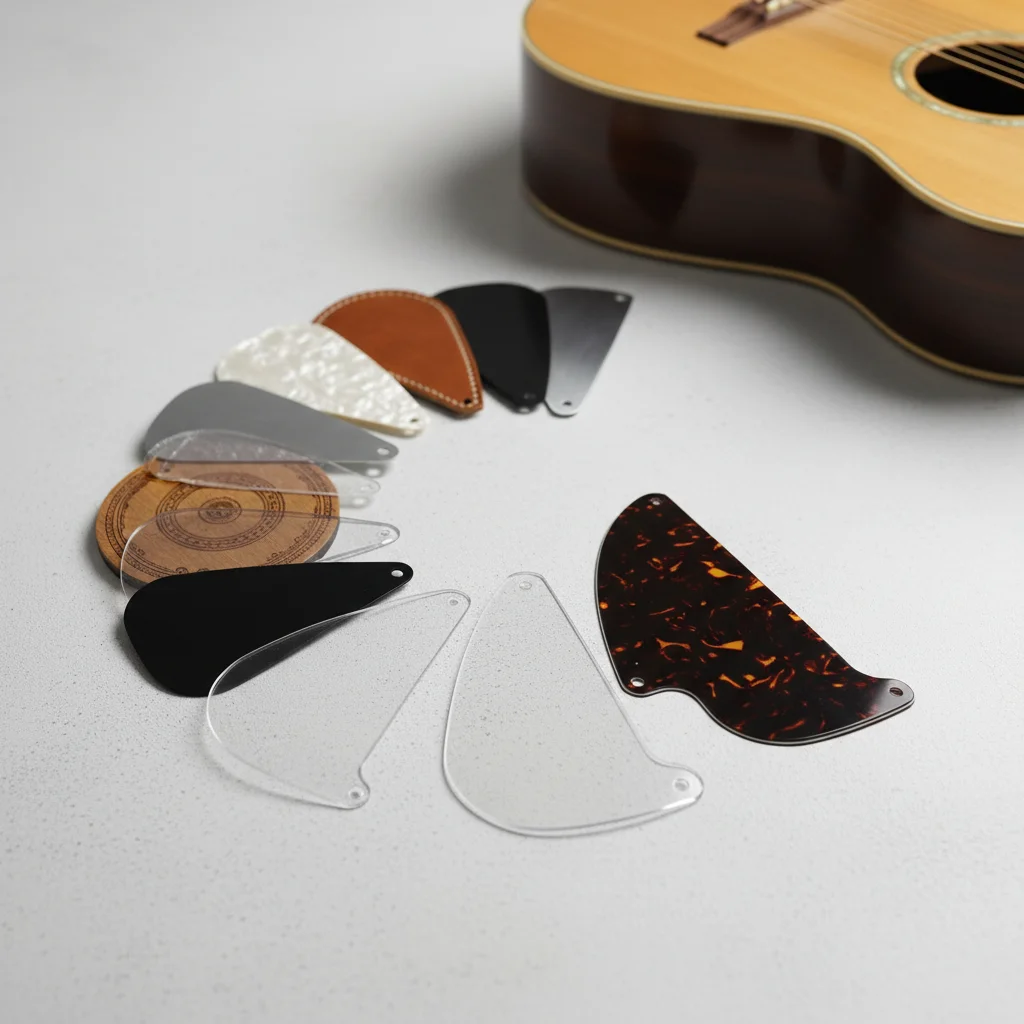
An acoustic guitar pickguard can indeed affect tone, though the impact is generally subtle and often debated among players. While its primary function is to protect the guitar’s finish from pick scratches, the material, thickness, and adhesive used can introduce minor changes to the instrument’s resonance and sustain. The most noticeable effects typically occur on guitars with very thin tops or highly resonant woods.
The Primary Role of a Pickguard
The fundamental purpose of an acoustic guitar pickguard is protection. It shields the delicate soundboard from the inevitable scratches and dings caused by strumming and picking. Without a pickguard, the constant contact of a pick would quickly mar the finish, potentially leading to wood damage over time. This protective layer is particularly crucial for aggressive players or those who frequently use a pick.
How Material and Thickness Influence Sound
The material and thickness of a pickguard are the main factors that can influence an acoustic guitar’s tone. Thicker, more rigid materials like celluloid or certain plastics can add a small amount of mass to the soundboard. This added mass can slightly dampen vibrations, potentially reducing sustain or altering the guitar’s natural resonance. Conversely, thinner, more flexible materials like vinyl or some modern synthetic options tend to have less impact on the sound. The density of the material also plays a role; a denser pickguard will absorb more vibrational energy than a lighter one.
- Celluloid: Often thicker, can slightly dampen high frequencies.
- PVC/Vinyl: Generally thinner and more flexible, minimal tonal impact.
- Wood: Can be resonant, but adds significant mass depending on thickness.
- Acrylic: Varies in thickness, typically has a neutral effect.
- Tortoise Shell (real): Rare and expensive, similar properties to celluloid.
Adhesive and Its Contribution to Tonal Change
|
Our Picks for the Best Acoustic Guitar in 2026
As an Amazon Associate I earn from qualifying purchases.
|
||
| Num | Product | Action |
|---|---|---|
| 1 | 38inch Wood Acoustic Guitar for Adults, 6 Steel-String Acoustic Guitar With Guitar Bag, Elementary Tutorial of Folk Guitar for Beginners. |

|
| 2 | Pyle Beginner Acoustic Guitar Kit, 3/4 Junior Size All Wood Instrument with Full Accessory Kit, Picks, Shoulder Strap, Carry Case, Cleaning Cloth, Tuner App, 2 Month Lessons, 36” (Natural Gloss) |
|
| 3 | Fender FA-25N 3/4 Size Nylon String Acoustic Guitar, Beginner Guitar, with 2-Year Warranty, Perfect Beginner Guitar for Kids that is Easy on Fingers, Includes 3 Months of Free Lessons, Natural |
|
| 4 | Joymusic 38 inch sunburst beginner acoustic guitar kit,bundle with a strap with picks holder,digital tuner, set strings, capo,cleaning cloth,6 picks,gig bag.(JG-38C,3TS) |
|
| 5 | Yamaha JR1 FG Junior 3/4 Size Acoustic Guitar, Natural |
|
| 6 | Moukey 38" Acoustic Guitar for Beginners Kids Youth Adult Dreadnought Guitarra Acustica Kit with Chord Poster, Gig Bag, Tuner, Picks, Nylon Strings, Capo, Strap - Black |
|
| 7 | Joymusic 38 inch brown beginner acoustic guitar kit,bundle with a strap with picks holder,digital tuner, set strings, capo,cleaning cloth,6 picks,gig bag.(JG-38C,BR) |
|
| 8 | Joymusic 38 inch blueburst beginner acoustic guitar kit,bundle with a strap with picks holder,digital tuner, set strings, capo,cleaning cloth,6 picks,gig bag.(JG-38C,BLS) |
|
| 9 | Ashthorpe 38-inch Beginner Acoustic Guitar Package (Blue), Basic Starter Kit w/Gig Bag, Strings, Strap, Tuner, Pitch Pipe, Picks |
|
| 10 | Ashthorpe 41-inch Beginner Cutaway Acoustic Guitar Package (Sunburst), Full Size Basic Starter Kit w/Gig Bag, Strings, Strap, Tuner, Picks |
|
Beyond the pickguard material itself, the adhesive used to attach it to the guitar’s top can also contribute to tonal changes. Strong, permanent adhesives that cover a large surface area can restrict the soundboard’s natural movement. This restriction can lead to a slight reduction in volume and sustain, as the top is less free to vibrate. Lighter adhesives or those applied in smaller, strategic patterns allow the wood to resonate more freely, minimizing any dampening effect. Some custom builders even use specific adhesives designed to be less intrusive to the guitar’s natural sound.
Placement and Size Considerations
The placement and size of the pickguard are also relevant. A larger pickguard covers more of the soundboard, potentially affecting a greater area of vibration. Pickguards placed directly over the most resonant parts of the top, often near the bridge or soundhole, are more likely to have a noticeable effect than smaller ones placed further away. While most pickguards are factory-installed in standard positions, custom pickguards or aftermarket additions can sometimes be positioned in ways that inadvertently alter the guitar’s natural voice. Consider the aesthetic and protective benefits alongside any potential tonal shifts when choosing a pickguard.
When Tonal Impact is Most Noticeable
The tonal impact of a pickguard is most noticeable on guitars that are already highly resonant and lightly built. Instruments with very thin, responsive soundboards, often found in high-end or vintage acoustic guitars, are more susceptible to subtle changes in vibration. On the other hand, guitars with thicker tops or heavier bracing may show little to no discernible difference in tone from a pickguard. Ultimately, for most players, the protective benefits of a pickguard far outweigh any minor, often imperceptible, tonal alterations. If you are highly sensitive to tonal nuances, experimenting with different pickguard materials or even playing without one (if you’re careful) might be an option.

I’ve always wondered about the tone impact of pickguards. I recently put a new one on my dreadnought, and honestly, I haven’t noticed a huge difference in resonance, which is a relief. It’s definitely doing its job protecting the finish from my aggressive strumming, especially since I tend to dig in a lot. Good to know the material choice is key.
I tried a thicker pickguard on my mahogany-top guitar, hoping for better protection, but I swear it slightly dampened the high-end sparkle. It wasn’t a huge change, but enough for me to notice. I ended up going back to a thinner, more flexible one. The protection is good, but I’m pretty sensitive to any tonal shifts.
This was super helpful! I have a vintage parlor guitar with a really thin top, and I’ve been hesitant to add a pickguard because I was worried about losing some of its unique sustain. Understanding that the adhesive plays a role makes me feel better about finding the right one. Protection is important, but not at the cost of that sweet tone.
I’m a fairly light player, but even I get those little pick scratches. I appreciate knowing that the primary function is protection. I’ve always just used whatever came on my guitars, but now I’m thinking about upgrading to a better quality material that won’t affect the soundboard as much. It’s a small detail but makes a big difference in keeping my guitar looking good.