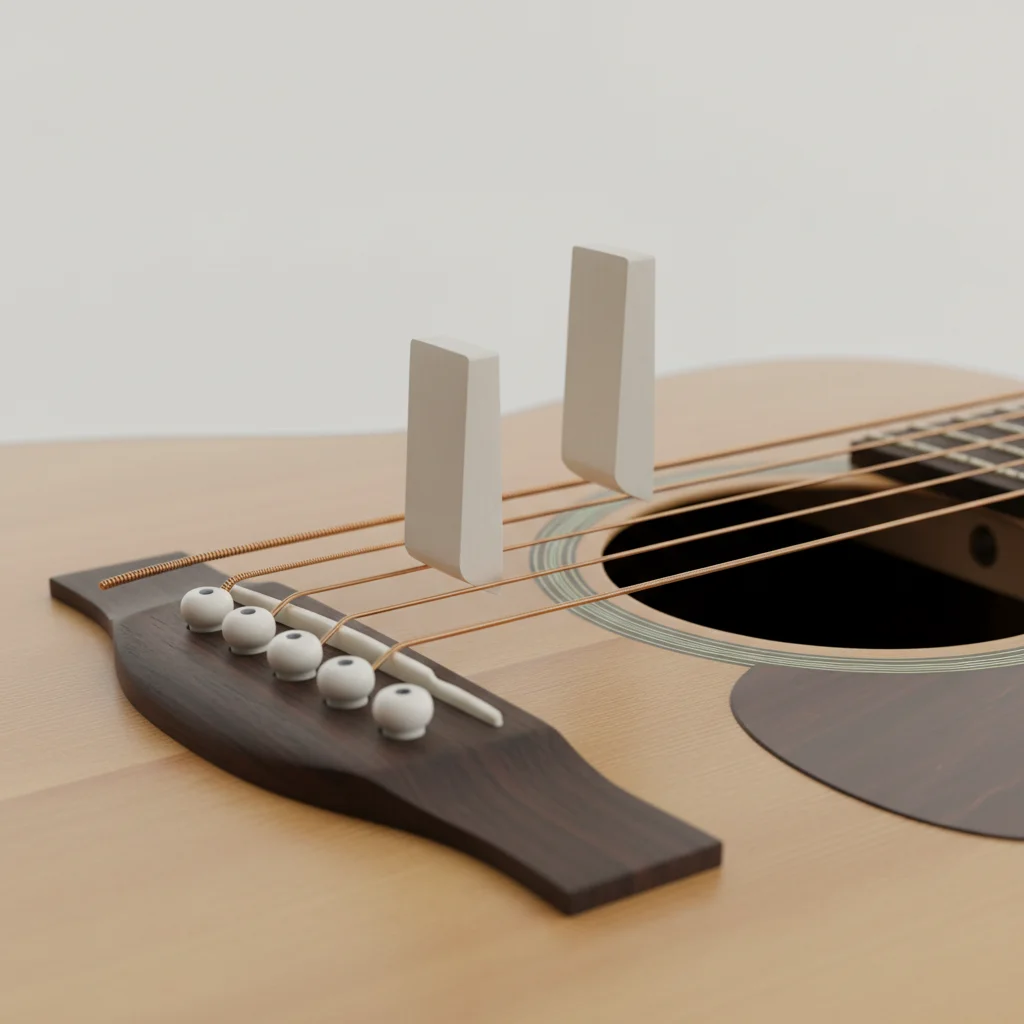
Acoustic guitar saddle height significantly impacts playability, directly influencing string action and intonation. Adjusting the saddle height is a critical component of a proper guitar setup, affecting how easy or difficult it is to fret notes and the overall comfort of playing. There are typically three main ways saddle height affects your guitar’s performance.
Understanding Saddle Height and String Action
The saddle, a small strip of bone, plastic, or synthetic material, sits in the bridge of your acoustic guitar and determines the height of the strings above the fretboard. When the saddle is too high, the strings will be too far from the frets, resulting in high action. This makes the guitar harder to play, requiring more finger pressure to fret notes and potentially causing discomfort or fatigue, especially for beginners or players with smaller hands. Conversely, a saddle that is too low can lead to buzzing strings as they make contact with the frets, particularly when played with force. Finding the optimal saddle height is a balance between comfortable playability and avoiding fret buzz, ensuring a clear, resonant tone across all strings.
Impact on Intonation and Tone
While often associated with string action, saddle height also plays a role in intonation. Although the primary intonation adjustment on an acoustic guitar is fixed by the bridge placement, an excessively high or low saddle can subtly affect how accurately notes ring out across the fretboard. A saddle that is too high can cause notes to sound sharp when fretted, especially in higher positions. Furthermore, the material and height of the saddle contribute to the guitar’s overall tone. A properly fitted and adjusted saddle ensures maximum vibration transfer from the strings to the guitar’s soundboard, contributing to sustain and clarity. An improperly seated or excessively low saddle can dampen vibrations, leading to a thinner or less resonant sound.
Adjusting Saddle Height: DIY vs. Professional
|
Our Picks for the Best Acoustic Guitar in 2026
As an Amazon Associate I earn from qualifying purchases.
|
||
| Num | Product | Action |
|---|---|---|
| 1 | 38inch Wood Acoustic Guitar for Adults, 6 Steel-String Acoustic Guitar With Guitar Bag, Elementary Tutorial of Folk Guitar for Beginners. |

|
| 2 | Yamaha JR1 FG Junior 3/4 Size Acoustic Guitar, Natural |
|
| 3 | Moukey 38" Acoustic Guitar for Beginners Kids Youth Adult Dreadnought Guitarra Acustica Kit with Chord Poster, Gig Bag, Tuner, Picks, Nylon Strings, Capo, Strap - Black |
|
| 4 | Pyle Beginner Acoustic Guitar Kit, 3/4 Junior Size All Wood Instrument with Full Accessory Kit, Picks, Shoulder Strap, Carry Case, Cleaning Cloth, Tuner App, 2 Month Lessons, 36” (Natural Gloss) |
|
| 5 | Joymusic 38 inch blueburst beginner acoustic guitar kit,bundle with a strap with picks holder,digital tuner, set strings, capo,cleaning cloth,6 picks,gig bag.(JG-38C,BLS) |
|
| 6 | Ashthorpe 41-inch Beginner Cutaway Acoustic Guitar Package (Sunburst), Full Size Basic Starter Kit w/Gig Bag, Strings, Strap, Tuner, Picks |
|
| 7 | Ashthorpe 38-inch Beginner Acoustic Guitar Package (Blue), Basic Starter Kit w/Gig Bag, Strings, Strap, Tuner, Pitch Pipe, Picks |
|
| 8 | Joymusic 38 inch brown beginner acoustic guitar kit,bundle with a strap with picks holder,digital tuner, set strings, capo,cleaning cloth,6 picks,gig bag.(JG-38C,BR) |
|
| 9 | Joymusic 38 inch sunburst beginner acoustic guitar kit,bundle with a strap with picks holder,digital tuner, set strings, capo,cleaning cloth,6 picks,gig bag.(JG-38C,3TS) |
|
| 10 | Fender FA-25N 3/4 Size Nylon String Acoustic Guitar, Beginner Guitar, with 2-Year Warranty, Perfect Beginner Guitar for Kids that is Easy on Fingers, Includes 3 Months of Free Lessons, Natural |
|
Adjusting acoustic guitar saddle height can be a DIY task for the confident hobbyist, but it requires precision and the right tools. The process typically involves removing the saddle, sanding down the bottom to reduce height, or shimming it to increase height. It’s crucial to make small, incremental adjustments and constantly check the action and intonation. For those uncomfortable with sanding or unsure about the precise measurements, a professional luthier or guitar technician can perform a saddle adjustment as part of a full setup. They have the experience and specialized tools to achieve optimal results without risking damage to the saddle or bridge. Consider your comfort level and the value of your instrument before attempting significant modifications yourself.
- Measure current string action at the 12th fret.
- Carefully remove the saddle from the bridge slot.
- Sand the bottom of the saddle evenly in small increments.
- Reinstall and re-string, then re-measure and test playability.
- Repeat until desired action is achieved, avoiding fret buzz.
When to Consider a Saddle Replacement
Sometimes, simply adjusting the existing saddle isn’t enough, and a full replacement might be necessary. This is often the case if the saddle is severely worn, cracked, or if it’s made from a low-quality material that’s hindering your guitar’s tone. Upgrading to a bone or TUSQ saddle can significantly improve sustain and clarity compared to plastic. A replacement is also advisable if you’re changing string gauges dramatically, as different gauges can require different saddle heights for optimal action and intonation. A new saddle can be custom-fitted to your guitar, ensuring perfect contact with the bridge and maximizing vibrational transfer.This can be a worthwhile investment for improving both the playability and sonic characteristics of your instrument.
Maintaining Optimal Saddle Height
Once you’ve achieved your desired saddle height, ongoing maintenance is minimal but important. Environmental factors like humidity and temperature can cause the guitar’s wood to expand or contract, subtly affecting string action over time. Regularly checking your guitar’s action, especially during seasonal changes, can help you identify if minor adjustments are needed. Keeping your guitar properly humidified will help stabilize the wood and maintain consistent action. If you notice buzzing, high action, or intonation issues, it might be time for another check-up.A well-maintained saddle height ensures your acoustic guitar remains comfortable to play and sounds its best for years to come.

This really clarified why my old acoustic was so hard on my fingers. I used to think it was just me, but understanding the role of the saddle in string height makes total sense. I’m considering getting a professional setup now to get that perfect action. It’s great to know what to ask for.
I always wondered why my new guitar felt so stiff. After reading about how saddle height affects string action, I realized that was my problem. A quick adjustment made a huge difference in playability, and now it’s so much more comfortable to fret notes. Definitely a game-changer for my practice sessions.
I’ve been struggling with hand fatigue during longer playing sessions, and I never connected it to the saddle. The explanation about high action making it harder to play was spot on for my experience. I lowered my saddle slightly, and it’s made a noticeable improvement in comfort. My fingers are thanking me!
I appreciate the info on how saddle height impacts intonation. I tried adjusting mine a bit, and while it helped with the action, I’m still getting some buzzing on the lower frets. It’s a bit more complicated than I thought to get it just right, especially with the different materials like bone or plastic. Might need to take it to a luthier.