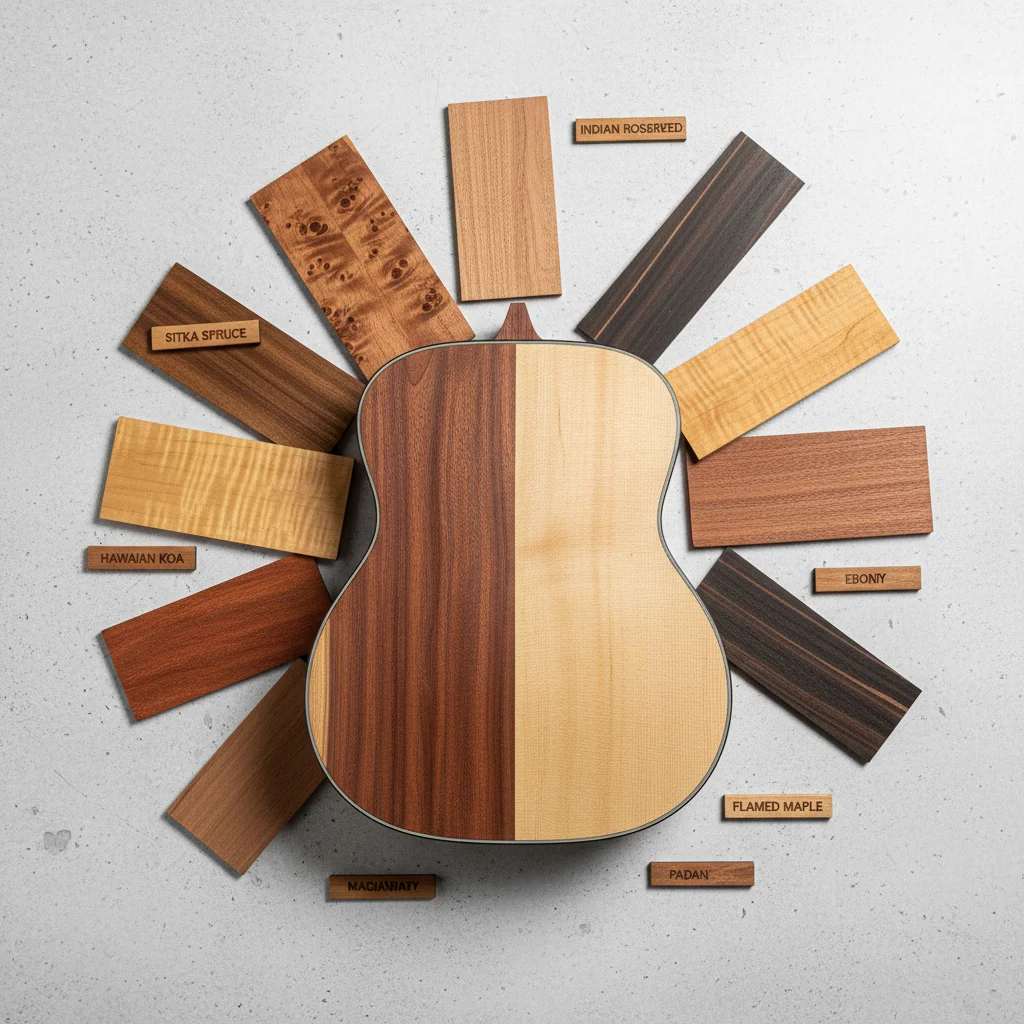
Acoustic guitar tone woods significantly impact an instrument’s sound profile, with at least five primary species commonly used for their distinct sonic characteristics. The choice of wood for the top, back, and sides dictates much of the guitar’s resonance, sustain, and tonal color. Understanding these differences is crucial for any player looking to purchase a new instrument or simply appreciate the craftsmanship of their current one.
Spruce: The Resonant Powerhouse for Guitar Tops
Spruce, particularly Sitka and Adirondack, is the most common and revered wood for acoustic guitar tops due to its exceptional strength-to-weight ratio. This allows it to be thinned considerably while maintaining structural integrity, making it highly responsive to vibrations. Sitka spruce offers a balanced tone with strong fundamentals and good overtone content, making it versatile for various playing styles. Adirondack spruce, often found on vintage and high-end instruments, is stiffer and lighter, providing greater volume, projection, and a more complex overtone series, though it typically requires more playing to open up its full potential. For complete acoustic guitar library on this site.
Mahogany: Warmth and Punch for Back and Sides
Mahogany is a popular choice for the back and sides of acoustic guitars, known for its warm, woody tone with a strong fundamental and less overtone complexity compared to rosewood. It produces a clear, direct sound with a quick decay, making it excellent for strumming and vocal accompaniment where the guitar needs to sit well in a mix without overpowering the vocals. Its mid-range presence is particularly pronounced, offering a punchy and articulate character. Mahogany is also relatively stable and less prone to cracking than some other tone woods.
Rosewood: Richness and Sustain for Back and Sides
|
Our Picks for the Best Acoustic Guitar in 2026
As an Amazon Associate I earn from qualifying purchases.
|
||
| Num | Product | Action |
|---|---|---|
| 1 | 38inch Wood Acoustic Guitar for Adults, 6 Steel-String Acoustic Guitar With Guitar Bag, Elementary Tutorial of Folk Guitar for Beginners. |

|
| 2 | Joymusic 38 inch blueburst beginner acoustic guitar kit,bundle with a strap with picks holder,digital tuner, set strings, capo,cleaning cloth,6 picks,gig bag.(JG-38C,BLS) |
|
| 3 | Moukey 38" Acoustic Guitar for Beginners Kids Youth Adult Dreadnought Guitarra Acustica Kit with Chord Poster, Gig Bag, Tuner, Picks, Nylon Strings, Capo, Strap - Black |
|
| 4 | Yamaha JR1 FG Junior 3/4 Size Acoustic Guitar, Natural |
|
| 5 | Joymusic 38 inch sunburst beginner acoustic guitar kit,bundle with a strap with picks holder,digital tuner, set strings, capo,cleaning cloth,6 picks,gig bag.(JG-38C,3TS) |
|
| 6 | Joymusic 38 inch brown beginner acoustic guitar kit,bundle with a strap with picks holder,digital tuner, set strings, capo,cleaning cloth,6 picks,gig bag.(JG-38C,BR) |
|
| 7 | Ashthorpe 38-inch Beginner Acoustic Guitar Package (Blue), Basic Starter Kit w/Gig Bag, Strings, Strap, Tuner, Pitch Pipe, Picks |
|
| 8 | Ashthorpe 41-inch Beginner Cutaway Acoustic Guitar Package (Sunburst), Full Size Basic Starter Kit w/Gig Bag, Strings, Strap, Tuner, Picks |
|
| 9 | Fender FA-25N 3/4 Size Nylon String Acoustic Guitar, Beginner Guitar, with 2-Year Warranty, Perfect Beginner Guitar for Kids that is Easy on Fingers, Includes 3 Months of Free Lessons, Natural |
|
| 10 | Pyle Beginner Acoustic Guitar Kit, 3/4 Junior Size All Wood Instrument with Full Accessory Kit, Picks, Shoulder Strap, Carry Case, Cleaning Cloth, Tuner App, 2 Month Lessons, 36” (Natural Gloss) |
|
Indian Rosewood is highly prized for its deep, rich overtones, extended sustain, and complex harmonic content when used for the back and sides. It offers a scooped mid-range, with strong bass and sparkling trebles, creating a lush, reverberant sound often described as ‘bell-like’. This makes it ideal for fingerstyle players and those who desire a full, orchestral sound. Brazilian Rosewood, while now extremely rare and regulated, is considered the pinnacle for its even greater depth, clarity, and responsiveness, though Indian Rosewood remains an excellent and more accessible alternative.
Maple: Clarity and Brightness for Back and Sides
Maple, particularly Big Leaf Maple, is chosen for its bright, clear tone and quick note decay, often resulting in a very articulate sound. It has less overtone content than rosewood and a more pronounced mid-range than mahogany, making it excellent for cutting through a band mix. Maple guitars tend to have a strong fundamental note and are less resonant, which can be desirable for players who want a focused sound without excessive sustain or ‘bloom’. Its striking visual figure, such as flame or quilt, also makes it a popular aesthetic choice.
Koa: A Unique Blend of Warmth and Brightness
Koa, an exotic wood from Hawaii, offers a unique tonal profile that starts bright and clear, similar to maple, but mellows and warms with age and playing, developing a richer mid-range and more overtone complexity akin to mahogany or even rosewood. It’s known for its beautiful grain patterns and is often used for entire guitars (top, back, and sides) as well as for decorative elements. Koa guitars are often chosen for their aesthetic appeal as much as their evolving tonal characteristics, making them a distinctive choice for players seeking something different.
- Spruce: Best for responsive, loud tops with balanced tone.
- Mahogany: Ideal for warm, punchy back/sides with strong fundamentals.
- Rosewood: Preferred for rich, complex overtones and long sustain.
- Maple: Excellent for bright, clear, articulate sound with quick decay.
- Koa: Unique evolving tone, starting bright and warming with age.
Ultimately, the best tone wood combination depends on a player’s individual preferences, playing style, and desired sound. Experimenting with different wood types can lead to discovering the perfect instrument for your musical journey.Many manufacturers offer detailed descriptions of the woods used in their guitars, helping you make an informed decision.

Super helpful breakdown of how different woods affect sound. I’m looking at a new guitar and was torn between a few options. Knowing that the back and sides also play a huge role in resonance really helps me narrow down my search. I’m leaning towards something with mahogany now for that warm, punchy mid-range.
Good info overall, especially about the strength-to-weight ratio of spruce. I found it a little light on examples of how specific wood combinations sound together, though. It would have been nice to hear more about how a spruce top pairs with, say, rosewood versus maple for the back and sides. Still, a solid read.
This was exactly what I needed! I’ve been trying to understand why my older guitar sounds so different from my friend’s, even though they’re both dreadnoughts. The explanation of how the choice of wood for the top, back, and sides dictates much of the guitar’s resonance really hit home. Now I get it!
I’ve always wondered about the differences in tone woods, and this really cleared things up. My dreadnought has a Sitka spruce top, and I totally agree about its balanced tone and versatility. It handles strumming and fingerpicking equally well, which is exactly what I need for my varied playing style. Great insights here!