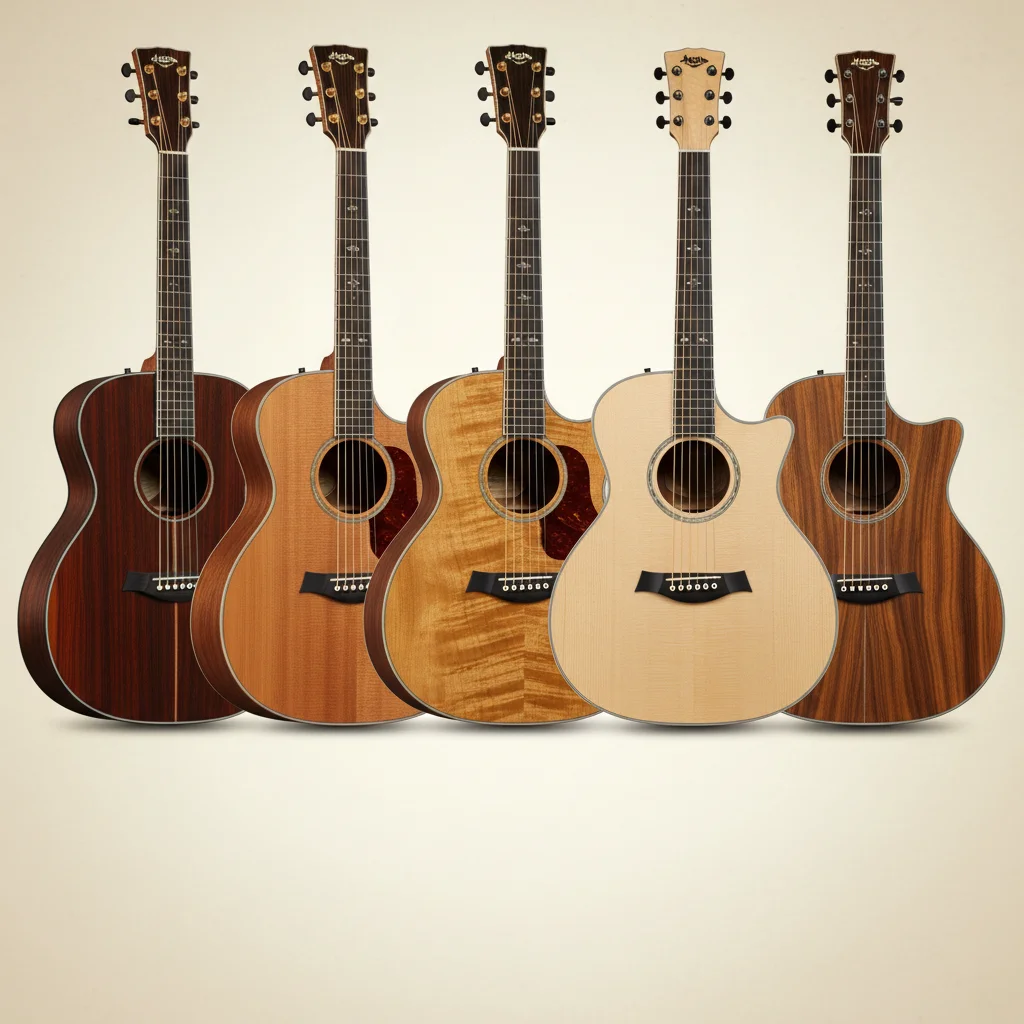
Acoustic guitar wood types significantly influence the instrument’s tone, resonance, and sustain. Different woods, used for the top, back, sides, and neck, contribute unique sonic characteristics, ranging from bright and articulate to warm and rich. Understanding these differences is crucial for any guitarist seeking a specific sound profile.
Spruce Tops: The Standard for Projection
Spruce is the most common wood used for acoustic guitar tops, and for good reason. Its high strength-to-weight ratio allows for a thin, resonant soundboard that produces a clear, powerful, and articulate tone with excellent projection. Sitka spruce is widely used, offering a balanced sound, while Adirondack spruce (red spruce) is prized for its stiffness and ability to produce a higher volume and broader dynamic range, often found on vintage and high-end instruments. Engelmann spruce provides a slightly warmer, more complex overtone series compared to Sitka. For expert acoustic guitar reviews on this site.
Mahogany Back and Sides: Warmth and Mid-Range Punch
Mahogany is a popular choice for the back and sides of acoustic guitars, known for its warm, woody tone with a strong mid-range presence. It offers a clear, direct sound with less overtone complexity than rosewood, making it excellent for strumming and vocal accompaniment. Guitars with mahogany back and sides tend to have a quick response and good note separation. It’s a versatile wood that pairs well with various top woods.
Rosewood Back and Sides: Richness and Sustain
Indian rosewood is highly regarded for its deep, rich tone with complex overtones, extended sustain, and a scooped mid-range. It provides strong bass and treble frequencies, creating a shimmering, resonant sound that is often described as ‘lush’ or ‘bell-like’. Brazilian rosewood, though now highly restricted, is considered the pinnacle for its even greater harmonic complexity and resonance. Rosewood is often favored by fingerstyle players due to its detailed and articulate sound.
Maple Back and Sides: Brightness and Clarity
|
Our Picks for the Best Acoustic Guitar in 2026
As an Amazon Associate I earn from qualifying purchases.
|
||
| Num | Product | Action |
|---|---|---|
| 1 | Moukey 38" Acoustic Guitar for Beginners Kids Youth Adult Dreadnought Guitarra Acustica Kit with Chord Poster, Gig Bag, Tuner, Picks, Nylon Strings, Capo, Strap - Black |

|
| 2 | Pyle Beginner Acoustic Guitar Kit, 3/4 Junior Size All Wood Instrument with Full Accessory Kit, Picks, Shoulder Strap, Carry Case, Cleaning Cloth, Tuner App, 2 Month Lessons, 36” (Natural Gloss) |
|
| 3 | 38inch Wood Acoustic Guitar for Adults, 6 Steel-String Acoustic Guitar With Guitar Bag, Elementary Tutorial of Folk Guitar for Beginners. |
|
| 4 | Joymusic 38 inch blueburst beginner acoustic guitar kit,bundle with a strap with picks holder,digital tuner, set strings, capo,cleaning cloth,6 picks,gig bag.(JG-38C,BLS) |
|
| 5 | Yamaha JR1 FG Junior 3/4 Size Acoustic Guitar, Natural |
|
| 6 | Joymusic 38 inch brown beginner acoustic guitar kit,bundle with a strap with picks holder,digital tuner, set strings, capo,cleaning cloth,6 picks,gig bag.(JG-38C,BR) |
|
| 7 | Ashthorpe 41-inch Beginner Cutaway Acoustic Guitar Package (Sunburst), Full Size Basic Starter Kit w/Gig Bag, Strings, Strap, Tuner, Picks |
|
| 8 | Joymusic 38 inch sunburst beginner acoustic guitar kit,bundle with a strap with picks holder,digital tuner, set strings, capo,cleaning cloth,6 picks,gig bag.(JG-38C,3TS) |
|
| 9 | Fender FA-25N 3/4 Size Nylon String Acoustic Guitar, Beginner Guitar, with 2-Year Warranty, Perfect Beginner Guitar for Kids that is Easy on Fingers, Includes 3 Months of Free Lessons, Natural |
|
| 10 | Ashthorpe 38-inch Beginner Acoustic Guitar Package (Blue), Basic Starter Kit w/Gig Bag, Strings, Strap, Tuner, Pitch Pipe, Picks |
|
Maple, particularly flamed or quilted maple, is chosen for its bright, clear tone with excellent note separation and minimal overtones. It tends to be very responsive and projects well, making it a good choice for stage performance where clarity is paramount. While it doesn’t offer the same warmth as mahogany or the complexity of rosewood, its focused sound can be ideal for certain musical styles. It’s also visually striking, adding to the aesthetic appeal of the instrument.
Neck Woods: Stability and Playability
The neck wood primarily affects the guitar’s stability and feel, though it can have a subtle impact on sustain. Mahogany is a common choice for necks due to its strength, stability, and relatively light weight. Maple is also frequently used, offering a very stable and bright-sounding neck. Some manufacturers use cedar or other woods, each contributing to the overall balance and playability of the instrument. The fretboard wood, typically rosewood or ebony, also influences the feel and attack of the notes.
- Sitka Spruce: Balanced, clear, strong projection.
- Mahogany: Warm, woody, strong mid-range.
- Indian Rosewood: Rich, complex overtones, extended sustain.
- Maple: Bright, clear, excellent note separation.
- Cedar: Warm, responsive, good for fingerstyle.
Choosing the right acoustic guitar wood types is a personal journey that depends on your playing style and desired sound. Experimenting with different combinations will help you find the perfect instrument for your musical expression. Consider visiting a local guitar shop to try out various models and hear the distinct tonal qualities firsthand.For those looking to explore a wide range of options from the comfort of their home, online retailers offer detailed specifications and sound samples to guide your decision.
