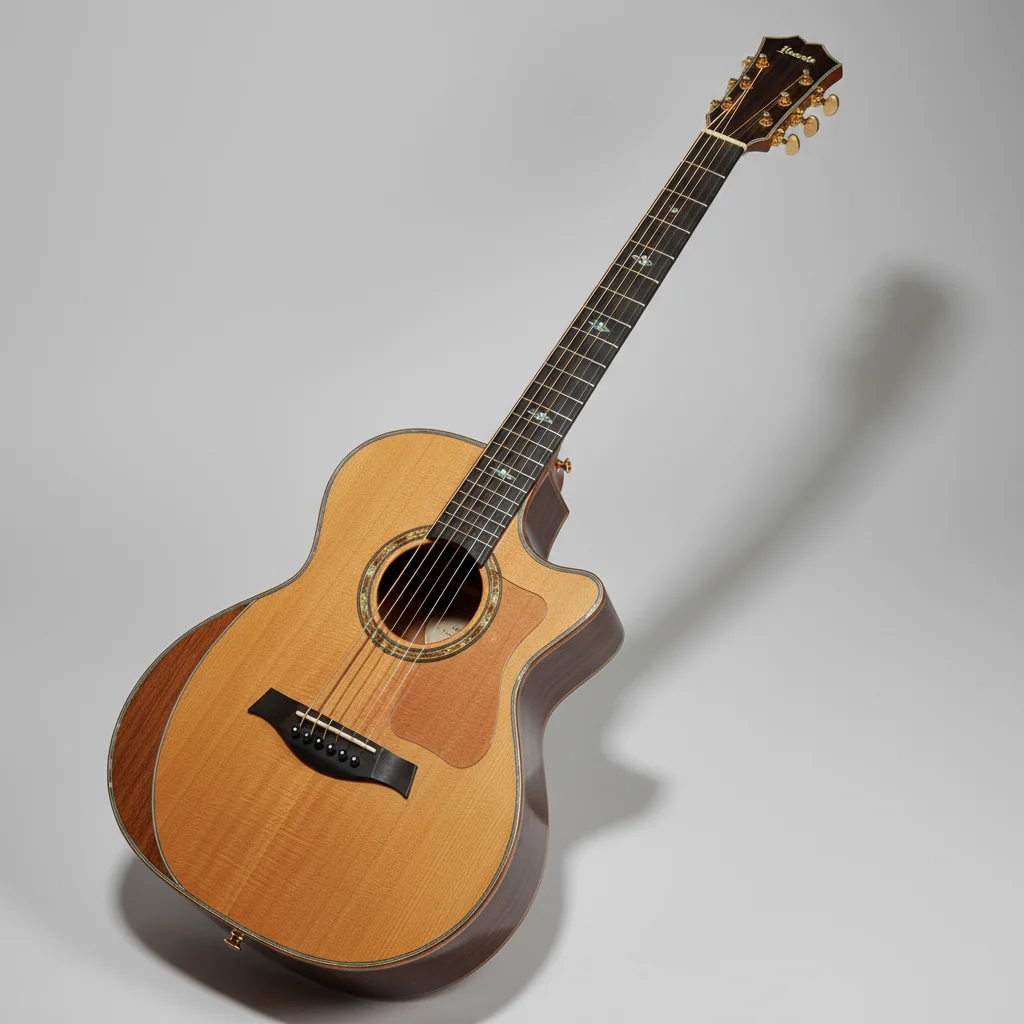
Best Ibanez Acoustic Guitar for Fingerstyle Players
The Ibanez Artwood AW54CE is the best Ibanez acoustic guitar for fingerstyle, offering a balanced tone and comfortable playability essential for intricate techniques. Its solid okoume top provides a warm, resonant sound that articulates individual notes clearly, a crucial feature for fingerstyle guitarists.
Quick Comparison of Ibanez Fingerstyle Guitars
| Model | Top Wood | Body Shape | Nut Width | Key Feature |
|---|---|---|---|---|
| Ibanez Artwood AW54CE | Solid Okoume | Dreadnought Cutaway | 43mm | Warm, balanced tone |
| Ibanez AC240E | Solid Okoume | Grand Concert | 44mm | Comfortable, articulate |
| Ibanez AE245LMT | Solid African Mahogany | AE Original | 44mm | Rich sustain, clarity |
What Fingerstyle Players Need from an Acoustic Guitar
Fingerstyle playing demands specific characteristics from an acoustic guitar to ensure clarity, comfort, and dynamic range. A wider nut width, typically 44mm or more, provides ample string spacing, preventing accidental muting and allowing for precise finger placement. Tonally, fingerstyle guitars benefit from a balanced sound profile, where individual notes are distinct without being overly bright or boomy. Solid wood tops, especially spruce, cedar, or mahogany, are preferred for their resonance and sustain, which enhance the natural decay of notes. The body shape also plays a role; smaller body sizes like Grand Concert or OM often offer better articulation and a more focused sound compared to larger dreadnoughts, though dreadnoughts with good setup can also perform well. A comfortable neck profile and low action are also vital for extended playing sessions and complex passages, reducing hand fatigue and improving playability.
Detailed Reviews of Ibanez Fingerstyle Acoustic Guitars
Ibanez Artwood AW54CE
The Ibanez Artwood AW54CE stands out for fingerstyle players due to its solid okoume top, which delivers a warm, woody tone with excellent projection and sustain. This dreadnought cutaway model offers a comfortable playing experience, despite its larger body, thanks to its well-designed neck profile. The open pore natural finish allows the wood to resonate freely, contributing to its rich sonic character. Its 43mm nut width is slightly narrower than some dedicated fingerstyle guitars but remains manageable for many players. The onboard Ibanez AEQ210TF preamp and Fishman Sonicore pickup system ensure that its natural acoustic tone translates beautifully when amplified, making it versatile for both practice and performance. The AW54CE provides exceptional value for its solid wood construction and balanced sound.
Ibanez AC240E
The Ibanez AC240E is an excellent choice for fingerstyle guitarists seeking comfort and articulate sound. Its Grand Concert body shape is smaller and more manageable than a dreadnought, making it very comfortable to hold and play for extended periods. The solid okoume top contributes to a clear, balanced tone with good note separation, which is crucial for intricate fingerstyle arrangements. With a 44mm nut width, it offers generous string spacing, facilitating precise finger placement and reducing the chance of buzzing. The mahogany back and sides add warmth and depth to the overall sound. Equipped with an Ibanez AEQ210TF preamp and Fishman Sonicore pickup, the AC240E is ready for stage or studio, delivering a faithful reproduction of its acoustic voice.
Ibanez AE245LMT
The Ibanez AE245LMT is a premium option for fingerstyle enthusiasts, featuring a solid African mahogany top that produces a rich, warm, and incredibly resonant tone with excellent sustain. Its unique AE original body shape is designed for comfort and projection, offering a balanced sound that highlights individual notes with clarity. The 44mm nut width provides ample space for complex fingerpicking patterns. The guitar’s advanced X-M bracing enhances the bass response while maintaining clear trebles. The Ibanez Custom Electronics with an undersaddle pickup and a contact pickup offer versatile amplification options, allowing players to blend the two for a natural and dynamic amplified sound. The AE245LMT is built for serious players who demand superior tone and playability.
Routine Fit for Fingerstyle Guitarists
For fingerstyle guitarists, the ideal Ibanez acoustic guitar seamlessly integrates into various routines, from daily practice to live performances. A comfortable body shape and neck profile are paramount for extended practice sessions, allowing players to focus on technique without discomfort. The guitar’s ability to articulate individual notes clearly is essential for developing precision and musicality in complex arrangements. For those who perform, reliable electronics that accurately reproduce the guitar’s natural tone are crucial. The chosen Ibanez model should inspire creativity and provide a consistent, enjoyable playing experience, whether working on new compositions, learning intricate pieces, or sharing music with an audience. Its robust construction ensures durability for regular use.
FAQs
What nut width is best for fingerstyle on an Ibanez acoustic?
For fingerstyle playing, a nut width of 44mm (1.73 inches) is generally considered ideal on an Ibanez acoustic guitar. This wider spacing provides more room between strings, which helps prevent accidental muting and allows for greater precision when picking individual notes with the fingers. While some players can adapt to narrower nut widths, 44mm offers a comfortable and forgiving platform for intricate fingerpicking patterns, reducing hand fatigue during extended playing sessions. Models like the Ibanez AC240E and AE245LMT feature this preferred nut width.
Do Ibanez acoustic guitars have good sustain for fingerstyle?
Yes, many Ibanez acoustic guitars, especially those with solid wood tops, offer excellent sustain suitable for fingerstyle playing. Sustain is crucial for fingerstyle as it allows notes to ring out clearly and naturally decay, adding richness and depth to the music. Models in the Artwood and AE series, featuring solid spruce, cedar, or mahogany tops, are particularly known for their resonant qualities and prolonged note decay. The construction and bracing also contribute significantly to the overall sustain, ensuring that each plucked note has a full and lingering presence.
Are smaller body Ibanez acoustics better for fingerstyle?
Smaller body Ibanez acoustic guitars, such as Grand Concert or OM (Orchestra Model) shapes, are often preferred for fingerstyle due to their focused tone and comfortable ergonomics. These body shapes typically offer better note separation and articulation compared to larger dreadnoughts, which can sometimes be too boomy for intricate fingerpicking. The reduced size also makes them more comfortable to hold and play for extended periods, especially when seated. While dreadnoughts can be adapted for fingerstyle, smaller bodies often provide a more immediate and responsive playing experience tailored to the nuances of fingerstyle technique.
What tonewoods are best for fingerstyle on an Ibanez?
For fingerstyle playing on an Ibanez acoustic, tonewoods that offer clarity, balance, and good sustain are highly desirable. Solid spruce tops (Sitka or Engelmann) are popular for their bright, articulate tone and excellent projection. Solid cedar tops provide a warmer, richer sound with a quicker response, ideal for delicate playing. Solid mahogany or okoume tops offer a woody, fundamental tone with strong mid-range presence and good sustain. Back and side woods like mahogany or ovangkol complement these tops by adding warmth and depth, ensuring a well-rounded sound that highlights individual notes effectively.
Can Ibanez dreadnoughts be used for fingerstyle?
Yes, Ibanez dreadnoughts can certainly be used for fingerstyle, although they might require a slightly different approach or setup compared to smaller-bodied guitars. While dreadnoughts are traditionally known for their strong projection and bass response, models like the Ibanez Artwood AW54CE, with its solid okoume top, can deliver a surprisingly balanced and articulate tone suitable for fingerpicking. A good setup with appropriate string action and possibly a wider nut width (if available) can enhance their playability for fingerstyle. Many fingerstyle players appreciate the fuller sound and greater volume that a dreadnought can offer, especially for solo performances.
Verdict
For fingerstyle guitarists seeking an Ibanez acoustic, the Artwood AW54CE offers an exceptional blend of warm tone, playability, and value. Its solid okoume top ensures clear note articulation and sustain, crucial for intricate techniques. While the AC240E provides a more compact and equally articulate option, and the AE245LMT delivers premium tone, the AW54CE strikes the best balance for most players. Ultimately, the best choice depends on individual preferences for body size, specific tonal characteristics, and budget, but all three models demonstrate Ibanez’s commitment to quality for fingerstyle players.
Frequently Asked Questions
What nut width is best for fingerstyle on an Ibanez acoustic?
For fingerstyle playing, a nut width of 44mm (1.73 inches) is generally considered ideal on an Ibanez acoustic guitar. This wider spacing provides more room between strings, which helps prevent accidental muting and allows for greater precision when picking individual notes with the fingers. Models like the Ibanez AC240E and AE245LMT feature this preferred nut width.
Do Ibanez acoustic guitars have good sustain for fingerstyle?
Yes, many Ibanez acoustic guitars, especially those with solid wood tops, offer excellent sustain suitable for fingerstyle playing. Sustain is crucial for fingerstyle as it allows notes to ring out clearly and naturally decay, adding richness and depth to the music. Models in the Artwood and AE series are particularly known for their resonant qualities and prolonged note decay.
Are smaller body Ibanez acoustics better for fingerstyle?
Smaller body Ibanez acoustic guitars, such as Grand Concert or OM shapes, are often preferred for fingerstyle due to their focused tone and comfortable ergonomics. These body shapes typically offer better note separation and articulation compared to larger dreadnoughts. The reduced size also makes them more comfortable to hold and play for extended periods, especially when seated.
What tonewoods are best for fingerstyle on an Ibanez?
For fingerstyle playing on an Ibanez acoustic, tonewoods that offer clarity, balance, and good sustain are highly desirable. Solid spruce tops are popular for their bright, articulate tone, while solid cedar tops provide a warmer, richer sound. Solid mahogany or okoume tops offer a woody, fundamental tone with strong mid-range presence and good sustain.
Can Ibanez dreadnoughts be used for fingerstyle?
Yes, Ibanez dreadnoughts can certainly be used for fingerstyle, although they might require a slightly different approach or setup compared to smaller-bodied guitars. Models like the Ibanez Artwood AW54CE, with its solid okoume top, can deliver a surprisingly balanced and articulate tone suitable for fingerpicking. A good setup can enhance their playability for fingerstyle.

I was intrigued by the Ibanez AE245LMT and its rich sustain, but I found the AE Original body shape a bit less comfortable than I’d hoped for extended fingerstyle practice. The sound is beautiful, especially the clarity, but I might need something with a slightly different feel for my playing style. Still a solid guitar overall.
I picked up the Ibanez AC240E after reading about its comfortable playability and articulate sound. The 44mm nut width is perfect for my hands, making those complex fingerpicking patterns much easier to execute. It’s a fantastic guitar for the price, though I wish the bass response was just a touch stronger.
I’ve been looking for a new guitar specifically for fingerstyle, and the Ibanez Artwood AW54CE really caught my eye. The solid okoume top delivers such a warm, clear tone, which is exactly what I need for intricate pieces. It’s incredibly comfortable to play, even for longer sessions. Definitely a great recommendation!
As a dedicated fingerstyle player, I can confirm that a wider nut width makes all the difference. The Ibanez models mentioned, especially those with 44mm, are spot on. My current Ibanez has been a workhorse, and the balanced tone is crucial for making individual notes sing. Highly recommend Ibanez for anyone serious about fingerstyle.