Maintaining an acoustic guitar involves consistent care for its environment, regular cleaning, proper string maintenance, and safe storage. The ideal relative humidity for an acoustic guitar is between 40% and 60%, with temperatures around 70-75°F (21-24°C). Neglecting these practices can lead to costly repairs and diminished sound quality, while consistent care ensures the instrument’s longevity and optimal performance for years.
Mastering Your Guitar’s Environment: Humidity and Temperature Control
Acoustic guitars are primarily crafted from wood, a material highly susceptible to changes in humidity and temperature. The wood in your guitar constantly interacts with the surrounding air, absorbing or releasing moisture. This natural process, known as hygroscopicity, means that improper environmental conditions can cause the wood to swell, shrink, or even crack, leading to structural damage, warping, and altered playability.
The ideal relative humidity for an acoustic guitar typically falls between 40% and 60%, with some manufacturers recommending a narrower 45-55% range. Temperatures around 70-75°F (21-24°C) are generally considered optimal. When humidity drops too low, the wood can dry out, causing fret ends to protrude, tops to sink, and cracks to form. Conversely, excessively high humidity can lead to the wood swelling, causing the top to belly, increasing string action, and potentially inviting mold or mildew. Monitoring these levels with a digital hygrometer is crucial. If your environment is consistently dry, an in-case humidifier or a room humidifier can introduce necessary moisture. In overly humid conditions, a dehumidifier or silica gel packs inside the case can help regulate moisture. Always store your guitar away from direct sunlight, heaters, air conditioning vents, or damp areas to prevent extreme fluctuations.
The Art of Cleaning: Keeping Your Guitar Pristine
Regular cleaning is fundamental to preserving your guitar’s appearance and ensuring optimal performance. Sweat, oils, and dust accumulate on the body, strings, and fretboard after each playing session, which can corrode strings, dull the finish, and build up grime.
Begin by wiping down your guitar’s body, neck, and strings with a soft, lint-free microfiber cloth after every use. This simple habit removes surface grime and prevents buildup. For the body, especially on lacquered finishes, a specialized guitar polish can restore its shine. Never use household cleaners, abrasive cloths, or polishes containing silicon or harsh chemicals, as these can damage your guitar’s finish. Always apply polish to the cloth first, not directly to the guitar, and test it on an inconspicuous area if unsure. Satin finishes should generally not be polished; a damp cloth is usually sufficient.
The fretboard, constantly exposed to finger oils and dirt, requires specific attention. When changing strings, take the opportunity to clean the fretboard thoroughly. Use a soft brush to remove loose debris, then apply a small amount of fretboard conditioner or lemon oil (specifically for unfinished rosewood or ebony boards) to a clean cloth and gently rub it into the wood. This cleans, conditions, and prevents drying. Be careful with gold-plated hardware, as the plating can be thin and easily damaged by aggressive cleaning.
String Care and Replacement: Maintaining Optimal Tone and Playability
Your guitar strings are vital for its sound, and old, corroded strings can make even the finest instrument sound dull. Over time, sweat, oils, and dirt accumulate on strings, leading to rust, reduced sustain, and poor intonation.
Wiping your strings down with a clean, lint-free cloth after each playing session significantly extends their life and keeps them sounding brighter. For a deeper clean, specialized string cleaners can be applied to a cloth and run along the strings to remove stubborn residue. However, even with diligent cleaning, strings eventually lose their vibrancy. A general rule of thumb is to change your acoustic guitar strings every 1 to 3 months, depending on how frequently you play and your body chemistry. Players with acidic sweat might need to change strings more often. Fresh strings not only sound better but also improve playability and intonation, making your guitar more enjoyable to play and easier to tune.
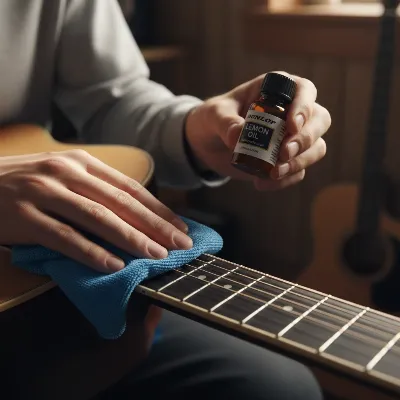 A person meticulously cleaning the fretboard of an acoustic guitar with a microfiber cloth and specialized oil, showcasing detail and care for the instrument's longevity.
Safe Storage and Handling: Protecting Your Investment
How and where you store your acoustic guitar plays a monumental role in its long-term health and stability. Improper storage is a leading cause of damage, from minor dings to severe structural issues.
Always store your guitar in a protective case, ideally a hard-shell case, when not in use. A good case shields it from accidental bumps, dust, and helps to stabilize humidity and temperature fluctuations. While guitar stands offer convenient access, they provide less protection and leave your guitar more exposed to environmental changes. If using a stand, ensure it’s in a stable area, away from high-traffic zones.
Avoid leaving your guitar in extreme environments such as hot cars, cold garages, or near open windows where it can be exposed to direct sunlight or drafts. Extreme heat can melt glues and warp wood, while extreme cold can cause cracking. If you must transport your guitar through varying climates, allow it to acclimate gradually to the new environment before opening its case. For extended periods of storage or travel, slightly loosening the strings can reduce tension on the neck, further safeguarding the instrument.
“Treat your acoustic guitar not just as an instrument, but as a finely crafted piece of art. Its longevity and sound quality are a direct reflection of the care you provide.” – Sarah Jenkins, Master Luthier
Essential Accessories for Acoustic Guitar Maintenance
Having the right tools makes maintaining your acoustic guitar far simpler and more effective. Investing in a few key accessories will protect your instrument and enhance your playing experience.
- Microfiber Cloths: These soft, lint-free cloths are indispensable for daily wipe-downs of the body, neck, and strings, removing fingerprints, sweat, and dust without scratching the finish.
- Guitar Polish/Cleaner: A guitar-specific polish or cleaner helps restore the luster of lacquered finishes and removes deeper grime. Ensure it’s suitable for your guitar’s finish type.
- Fretboard Conditioner/Oil: Products like lemon oil are essential for cleaning and moisturizing unfinished rosewood or ebony fretboards, preventing them from drying out and cracking.
- Guitar Humidifier/Dehumidifier: Depending on your climate, these devices are crucial for maintaining optimal humidity levels, whether placed in your guitar’s soundhole or case, or as a room unit.
- Digital Hygrometer: This small device measures humidity and temperature, allowing you to monitor your guitar’s environment and take corrective action when necessary.
- String Cleaner: While regular wiping helps, dedicated string cleaners can remove stubborn residue, prolonging string life and brightness.
- Hard-Shell Case: Offers superior protection against physical damage and helps stabilize internal climate, making it the safest storage option for your guitar.
- Guitar Stand: Convenient for short-term storage and display, keeping your guitar readily accessible for playing, though less protective than a case.
 Various essential acoustic guitar maintenance accessories laid out, including a microfiber cloth, polish, humidifier, and string winder, emphasizing comprehensive care.
Conclusion
Maintaining your acoustic guitar is an ongoing journey that profoundly impacts its longevity, playability, and tonal beauty. By consistently controlling humidity, performing regular cleaning, replacing strings promptly, and ensuring safe storage, you are investing in the instrument’s future. These essential practices not only protect your investment but also ensure that every strum and every note resonates with the rich, vibrant sound it was designed to produce. Embrace these habits, and your acoustic guitar will remain a cherished source of musical inspiration for decades. What small change can you make today to improve your guitar’s care routine?
Frequently Asked Questions
How often should I clean my acoustic guitar?
|
Our Picks for the Best Acoustic Guitar in 2026
As an Amazon Associate I earn from qualifying purchases.
|
||
| Num | Product | Action |
|---|---|---|
| 1 | 38inch Wood Acoustic Guitar for Adults, 6 Steel-String Acoustic Guitar With Guitar Bag, Elementary Tutorial of Folk Guitar for Beginners. |

|
| 2 | Fender FA-25N 3/4 Size Nylon String Acoustic Guitar, Beginner Guitar, with 2-Year Warranty, Perfect Beginner Guitar for Kids that is Easy on Fingers, Includes 3 Months of Free Lessons, Natural |
|
| 3 | Ashthorpe 38-inch Beginner Acoustic Guitar Package (Blue), Basic Starter Kit w/Gig Bag, Strings, Strap, Tuner, Pitch Pipe, Picks |
|
| 4 | Ashthorpe 41-inch Beginner Cutaway Acoustic Guitar Package (Sunburst), Full Size Basic Starter Kit w/Gig Bag, Strings, Strap, Tuner, Picks |
|
| 5 | Pyle Beginner Acoustic Guitar Kit, 3/4 Junior Size All Wood Instrument with Full Accessory Kit, Picks, Shoulder Strap, Carry Case, Cleaning Cloth, Tuner App, 2 Month Lessons, 36” (Natural Gloss) |
|
| 6 | Joymusic 38 inch sunburst beginner acoustic guitar kit,bundle with a strap with picks holder,digital tuner, set strings, capo,cleaning cloth,6 picks,gig bag.(JG-38C,3TS) |
|
| 7 | Yamaha JR1 FG Junior 3/4 Size Acoustic Guitar, Natural |
|
| 8 | Joymusic 38 inch brown beginner acoustic guitar kit,bundle with a strap with picks holder,digital tuner, set strings, capo,cleaning cloth,6 picks,gig bag.(JG-38C,BR) |
|
| 9 | Moukey 38" Acoustic Guitar for Beginners Kids Youth Adult Dreadnought Guitarra Acustica Kit with Chord Poster, Gig Bag, Tuner, Picks, Nylon Strings, Capo, Strap - Black |
|
| 10 | Joymusic 38 inch blueburst beginner acoustic guitar kit,bundle with a strap with picks holder,digital tuner, set strings, capo,cleaning cloth,6 picks,gig bag.(JG-38C,BLS) |
|
You should lightly wipe down your acoustic guitar with a microfiber cloth after every playing session to remove sweat and oils. A deeper clean of the body and fretboard, including polishing and conditioning, can be done every few months or whenever you change your strings, which is typically every 1-3 months.
Can I use household cleaning products on my acoustic guitar?
No, it is strongly advised against using household cleaning products, furniture polish, or alcohol-based cleaners on your acoustic guitar. These products can contain harsh chemicals or silicon that may damage your guitar’s delicate finish or leave harmful residues. Always use products specifically designed for guitars.
What is the ideal humidity level for an acoustic guitar?
The ideal relative humidity for an acoustic guitar is between 40% and 60%, with many experts recommending a tighter range of 45-55%. Maintaining this range prevents the wood from drying out and cracking or swelling and warping, which can severely impact the instrument’s structural integrity and playability.
Is it better to store my acoustic guitar in a hard case or on a stand?
For optimal protection and humidity control, storing your acoustic guitar in a hard-shell case is always preferable, especially for long-term storage or travel. A hard case shields the guitar from physical damage and helps stabilize the internal climate. A guitar stand is convenient for short periods but offers less protection.
How do I know if my acoustic guitar is too dry or too humid?
Signs of a dry guitar include protruding fret ends, a sunken top, or even cracks in the wood. An overly humid guitar might show a bulging top (bellying), high string action, or a duller tone. A digital hygrometer placed near or in your guitar case is the most accurate way to monitor humidity levels.
Frequently Asked Questions
How often should I clean my acoustic guitar?
You should lightly wipe down your acoustic guitar with a microfiber cloth after every playing session to remove sweat and oils. A deeper clean of the body and fretboard, including polishing and conditioning, can be done every few months or whenever you change your strings, which is typically every 1-3 months.
Can I use household cleaning products on my acoustic guitar?
No, it is strongly advised against using household cleaning products, furniture polish, or alcohol-based cleaners on your acoustic guitar. These products can contain harsh chemicals or silicon that may damage your guitar's delicate finish or leave harmful residues. Always use products specifically designed for guitars.
What is the ideal humidity level for an acoustic guitar?
The ideal relative humidity for an acoustic guitar is between 40% and 60%, with many experts recommending a tighter range of 45-55%. Maintaining this range prevents the wood from drying out and cracking or swelling and warping, which can severely impact the instrument's structural integrity and playability.
Is it better to store my acoustic guitar in a hard case or on a stand?
For optimal protection and humidity control, storing your acoustic guitar in a hard-shell case is always preferable, especially for long-term storage or travel. A hard case shields the guitar from physical damage and helps stabilize the internal climate. A guitar stand is convenient for short periods but offers less protection.
How do I know if my acoustic guitar is too dry or too humid?
Signs of a dry guitar include protruding fret ends, a sunken top, or even cracks in the wood. An overly humid guitar might show a bulging top (bellying), high string action, or a duller tone. A digital hygrometer placed near or in your guitar case is the most accurate way to monitor humidity levels.

This really helped me understand why my guitar was sounding off sometimes. I never realized how crucial the temperature around 70-75°F was for the wood. I’ve adjusted my thermostat and my guitar sounds so much clearer now. It’s amazing what a difference consistent care makes!
I’ve been playing for years, and the tip about maintaining 40-60% relative humidity is a game-changer. I used to just keep my guitar in its case, but after reading about hygroscopicity, I invested in a humidifier for my music room. My guitar’s tone has never been better, and I feel much more confident about its longevity. Definitely worth the extra effort!
Good advice on string maintenance. I always changed my strings when they broke or sounded dead, but the reminder to clean them regularly and check for corrosion has really improved my playing experience. My only minor complaint is that it didn’t go into super specific brands of string cleaners, but the general guidance is solid.
The section on proper storage was helpful, especially the part about avoiding extreme temperatures. I used to leave my guitar out in the living room, but now I’m more diligent about putting it back in its case. However, I wish there was more detail on specific types of cases and what to look for in terms of protection. It felt a bit general.