Fret buzz on an acoustic guitar, characterized by a metallic rattling sound, occurs when a vibrating string unintentionally contacts one or more frets. This issue often stems from improper neck relief, low string action, or uneven frets, and can typically be resolved at home with basic tools and a methodical approach. Addressing fret buzz restores clarity and resonance, significantly improving your guitar’s tone and playability.
Understanding Fret Buzz
Fret buzz happens when a vibrating guitar string makes unintentional contact with one or more frets along the fingerboard, producing a sharp, often muffled sound instead of a clear, ringing note. This common issue is rarely a sign of serious damage but rather an indication that your guitar’s setup or environment might need attention. Identifying the root cause is the first critical step toward a successful DIY repair.
Several factors commonly contribute to fret buzz. Improper neck relief, where the neck is either too straight (back-bowed) or has too much forward curve (forward-bowed), can cause strings to hit frets. Low string action, meaning the strings are set too close to the fretboard, leaves insufficient space for them to vibrate freely. Uneven or worn frets, which can develop high spots, dips, or general wear over time, will also interfere with string vibration. Additionally, nut issues (if the nut slots are too low), saddle problems (if the saddle is too low or grooved), and even changes in humidity causing the wood to expand or contract, can all lead to unwanted buzzing. Sometimes, even an aggressive playing style can induce buzz if the guitar isn’t set up to accommodate it. For see our acoustic guitar recommendations on this site.
Preliminary Checks
Before you start making adjustments, it’s crucial to perform a few preliminary checks to accurately pinpoint the source of the fret buzz. A systematic approach will help you avoid unnecessary modifications and lead to a more effective solution.
Begin by identifying exactly where the buzz occurs. Play each string, fretting every note up and down the neck. Is the buzz happening on open strings, in the lower frets (1-5), the middle frets (5-12), or higher up the neck? Note which strings and frets are affected. This information will guide your troubleshooting. Next, check the neck relief. Place a capo on the first fret and hold down a string (usually the low E or A string) at the fret where the neck joins the body (typically around the 12th or 14th fret). Observe the small gap between the bottom of the string and the top of the frets in the middle of the neck, particularly around the 6th to 8th fret. A very slight gap (about the thickness of a business card) indicates proper relief. If there’s no gap or the string is touching the frets, the neck might be back-bowed; a large gap suggests too much forward-bow.
Inspect the nut height by looking at the action at the first fret. If pressing down a string at the second fret almost touches the first fret, your nut slots might be too low, leading to buzzing on open strings or the first few frets. Examine the saddle height at the bridge. Visually check if the saddle is too low or if there are deep grooves worn into it by the strings. Finally, test for uneven frets using a fret rocker (a small, precise straight edge) or even a credit card. Place the straight edge across three adjacent frets and gently rock it. If it rocks, one of the three frets is likely uneven, causing localized buzzing.
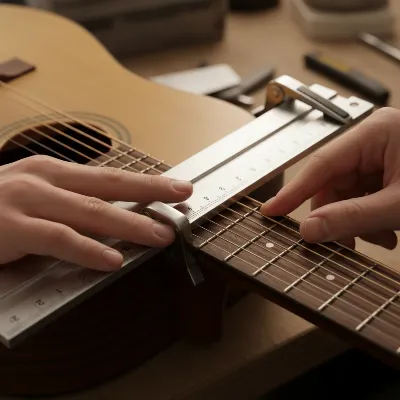 A person checking acoustic guitar neck for fret buzz with a straight edge and capo, close-up, natural lighting, realistic style
DIY Fixes for Fret Buzz
Once you have identified the potential cause of the fret buzz, you can proceed with targeted DIY adjustments. to make small, incremental changes and re-check your guitar frequently to avoid over-adjusting.
Adjusting Neck Relief (Truss Rod)
|
Our Picks for the Best Acoustic Guitar in 2026
As an Amazon Associate I earn from qualifying purchases.
|
||
| Num | Product | Action |
|---|---|---|
| 1 | 38inch Wood Acoustic Guitar for Adults, 6 Steel-String Acoustic Guitar With Guitar Bag, Elementary Tutorial of Folk Guitar for Beginners. |

|
| 2 | Ashthorpe 41-inch Beginner Cutaway Acoustic Guitar Package (Sunburst), Full Size Basic Starter Kit w/Gig Bag, Strings, Strap, Tuner, Picks |
|
| 3 | Fender FA-25N 3/4 Size Nylon String Acoustic Guitar, Beginner Guitar, with 2-Year Warranty, Perfect Beginner Guitar for Kids that is Easy on Fingers, Includes 3 Months of Free Lessons, Natural |
|
| 4 | Joymusic 38 inch blueburst beginner acoustic guitar kit,bundle with a strap with picks holder,digital tuner, set strings, capo,cleaning cloth,6 picks,gig bag.(JG-38C,BLS) |
|
| 5 | Joymusic 38 inch brown beginner acoustic guitar kit,bundle with a strap with picks holder,digital tuner, set strings, capo,cleaning cloth,6 picks,gig bag.(JG-38C,BR) |
|
| 6 | Pyle Beginner Acoustic Guitar Kit, 3/4 Junior Size All Wood Instrument with Full Accessory Kit, Picks, Shoulder Strap, Carry Case, Cleaning Cloth, Tuner App, 2 Month Lessons, 36” (Natural Gloss) |
|
| 7 | Joymusic 38 inch sunburst beginner acoustic guitar kit,bundle with a strap with picks holder,digital tuner, set strings, capo,cleaning cloth,6 picks,gig bag.(JG-38C,3TS) |
|
| 8 | Moukey 38" Acoustic Guitar for Beginners Kids Youth Adult Dreadnought Guitarra Acustica Kit with Chord Poster, Gig Bag, Tuner, Picks, Nylon Strings, Capo, Strap - Black |
|
| 9 | Ashthorpe 38-inch Beginner Acoustic Guitar Package (Blue), Basic Starter Kit w/Gig Bag, Strings, Strap, Tuner, Pitch Pipe, Picks |
|
| 10 | Yamaha JR1 FG Junior 3/4 Size Acoustic Guitar, Natural |
|
If your fret buzz is localized to the middle frets (around the 5th to 12th frets) or if you notice your neck is excessively straight or bowed backward (back-bowed), adjusting the truss rod is often the solution. The truss rod is a metal bar running inside the guitar’s neck, counteracting string tension to control the neck’s curve.
To adjust, locate the truss rod access point, usually at the headstock under a cover or inside the soundhole at the base of the neck. Use the correct size truss rod wrench. To add relief (making the neck bow forward slightly, which raises the strings for more clearance) and address buzz from a back-bowed neck, turn the truss rod nut counter-clockwise in small increments—no more than an eighth to a quarter turn at a time. If the neck has too much forward bow and your action is too high, you would tighten the truss rod by turning it clockwise to straighten the neck slightly. After each adjustment, retune your guitar and let it settle for at least 15-30 minutes before re-checking the neck relief and playing to assess the buzz. Patience is key here, as wood reacts slowly to changes in tension.
Adjusting String Height (Saddle)
If the buzz occurs across the higher frets or if your guitar’s overall string action feels too low, the saddle height likely needs adjustment. The saddle, located in the bridge, significantly influences the string height at the body end.
To lower the action, you’ll need to remove the saddle. Loosen the strings, carefully remove the bridge pins, and then lift out the saddle. Using a piece of fine-grit sandpaper (100-220 grit) placed on a perfectly flat surface (like a granite countertop or a thick piece of glass), gently sand the bottom of the saddle. Keep the saddle flat and apply even pressure to ensure you remove material uniformly. The general rule of thumb is that for every 2mm you remove from the saddle height, the action at the 12th fret will be lowered by 1mm. Sand gradually, check your progress frequently, and refit the saddle to test the action before sanding further. It’s always easier to remove more material than to add it back.
To raise the action, for instance, if your saddle is too low, you can insert shims beneath the existing saddle. Materials like thin strips cut from an old credit card, hardwood veneer, or purpose-made bone shims work effectively. Ensure the shim fits snugly and completely under the saddle for consistent tone and to avoid future issues.
Addressing Nut Issues
Fret buzz specifically on open strings or the first few frets often points to the nut slots being too low. The nut, located at the top of the neck, sets the string height at the headstock end.
For a temporary, quick fix, you can try placing a tiny piece of paper or thin material folded once or twice into the problematic nut slot, directly under the buzzing string. This can slightly raise the string and alleviate the buzz. For a more permanent DIY solution, some guitarists carefully fill the low nut slot with a mixture of baking soda and super glue, then re-file it to the correct height using specialized nut files (or even a thin, fine-grit abrasive paper carefully folded). However, this method requires precision, and excessive filing can worsen the problem. If you’re uncomfortable with this, or if multiple slots are too low, replacing the nut or seeking professional help might be the best course of action. If your nut slots are too high, making playing in the first position difficult, you would carefully file them down to the correct depth, again using specialized nut files or a very fine abrasive.
Identifying and Minor Fixes for Uneven Frets
Uneven frets, where one or more frets are slightly higher than their neighbors, can cause localized buzz after all other adjustments have been made. This often requires professional intervention, but you can identify the problem at home.
As mentioned in the preliminary checks, use a fret rocker or a credit card across groups of three frets. If the tool rocks, you’ve found an uneven fret. For minor cases, if a fret is simply not seated properly, you might be able to gently tap it back into place using a small mallet and a fret press caulk (a small block of wood or plastic). However, significant fret work, such as leveling, crowning, or replacing frets, is a delicate process that requires specialized tools and expertise. Attempting these advanced repairs without proper knowledge can cause irreversible damage to your fretboard. For anything beyond a simple reseating, it’s highly recommended to consult a qualified guitar technician.
Essential Tools for DIY Fret Buzz Repair
Having the right tools on hand will make diagnosing and fixing fret buzz much easier and more precise. While some fixes can be done with household items, investing in a few specialized guitar tools is beneficial for any guitarist keen on maintaining their instrument.
Here’s a list of essential tools:
- Truss Rod Wrench: Crucial for adjusting neck relief, ensure you have the correct size for your guitar’s specific truss rod nut.
- String Action Ruler/Gauge: A specialized ruler designed to measure string height at various points on the fretboard (e.g., at the 12th fret, and 1st fret).
- Capo: Used to help measure neck relief accurately by holding down strings at the first fret.
- Small Straight Edge (Fret Rocker or Credit Card): Indispensable for checking individual frets for unevenness. A dedicated fret rocker has multiple length edges to span different fret spacings.
- Fine-Grit Sandpaper (100-220 grit): Essential for carefully sanding down acoustic guitar saddles.
- Flat Surface: A perfectly flat, hard surface (like glass, granite, or a machinist’s block) is needed to ensure even sanding of the saddle.
- Small Shims: Thin, rigid materials like credit card strips, wood veneer, or brass shim stock can be used to raise saddle or nut height temporarily.
- Small Piece of Paper: Useful for a quick test of low nut slots.
- Feeler Gauges (Optional but Recommended): For precise measurement of neck relief and string height.
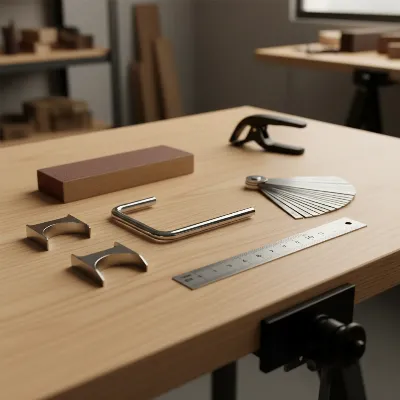 Assortment of guitar setup tools, including wrenches, gauges, and sandpaper, in a workshop setting, organized, bright lighting, realistic style
How to Avoid Fret Buzz
Preventing fret buzz is often simpler than fixing it, and regular maintenance can save you a lot of headache. Proactive care helps keep your acoustic guitar playing smoothly and sounding its best for years to come.
Firstly, maintain proper humidification for your guitar. Wood is highly susceptible to changes in humidity, which can cause the neck and body to expand or contract, directly impacting string action and neck relief. Aim to store your guitar in an environment with 40-50% relative humidity. Using a guitar humidifier in dry climates or a dehumidifier in excessively humid conditions can make a significant difference. Secondly, perform regular maintenance and cleaning. Keeping your fretboard and strings clean prevents grime buildup that can affect string vibration. Regularly changing old or corroded strings also helps, as worn strings can buzz more easily. Thirdly, choose an appropriate string gauge for your guitar and playing style. Switching to a much lighter gauge without adjusting your guitar’s setup can increase the likelihood of buzz due to reduced string tension. Finally, be mindful of your playing technique. While not always the primary cause, an overly aggressive strumming or picking attack can induce buzz, especially if your guitar is set up with very low action. Adjusting your technique or slightly raising the action can help. When in doubt, consider a regular professional setup by a qualified luthier. A good setup ensures your guitar is optimized for playability and tone, compensating for environmental changes and wear over time.
Conclusion
Fret buzz, though a common nuisance for acoustic guitarists, is a problem that can often be resolved with a methodical approach and a few simple tools. By understanding the various causes—from improper neck relief and low action to uneven frets and environmental factors—you empower yourself to diagnose and tackle these issues head-on. Whether it’s a minor truss rod adjustment, careful saddle sanding, or a temporary nut shim, taking the time to fine-tune your instrument can significantly enhance its playability and sound. The satisfaction of hearing a clear, ringing note without any unwanted buzzing is a reward in itself. So, grab your tools, approach with patience, and rediscover the joy of a perfectly sounding acoustic guitar. What will you play first now that your guitar is buzz-free?
Frequently Asked Questions
Can fret buzz damage my guitar?
Generally, fret buzz itself does not cause structural damage to your guitar. However, it is a symptom of an underlying issue, such as improper neck relief or uneven frets, which if left unaddressed, could contribute to accelerated fret wear or other setup problems over time.
How often should I check for fret buzz?
It’s a good practice to check for fret buzz seasonally or whenever you notice a change in your guitar’s playability or sound. Wood reacts to temperature and humidity fluctuations, so regular checks (every few months) or after significant environmental changes are recommended.
When should I take my guitar to a professional for fret buzz?
You should consult a professional luthier or guitar technician if you’re uncomfortable performing DIY adjustments, if the buzz persists after trying basic fixes, or if you suspect more complex issues like severely uneven or worn frets, a twisted neck, or bridge plate issues.
Does string gauge affect fret buzz?
Yes, string gauge can affect fret buzz. Lighter gauge strings have less tension and vibrate with a wider arc, making them more prone to buzzing if the guitar’s setup (especially neck relief and action) isn’t adjusted accordingly. Switching to a heavier gauge can sometimes reduce buzz due to increased tension.
Can new strings cause fret buzz?
While less common, new strings can sometimes temporarily contribute to fret buzz. This might happen if the new strings have a different tension or diameter than the previous set, subtly altering the neck relief or how they sit in the nut slots. Usually, after a short break-in period and minor adjustments, any buzz related to new strings should resolve.
Frequently Asked Questions
Can fret buzz damage my acoustic guitar over time?
Generally, fret buzz itself does not cause structural damage to your guitar. However, it is a symptom of an underlying issue, such as improper neck relief or uneven frets, which if left unaddressed, could contribute to accelerated fret wear or other setup problems over time.
How frequently should I inspect my guitar for fret buzz?
It's a good practice to check for fret buzz seasonally or whenever you notice a change in your guitar's playability or sound. Wood reacts to temperature and humidity fluctuations, so regular checks every few months or after significant environmental changes are recommended.
When is it best to seek professional help for guitar fret buzz?
You should consult a professional luthier or guitar technician if you're uncomfortable performing DIY adjustments, if the buzz persists after trying basic fixes, or if you suspect more complex issues like severely uneven or worn frets, a twisted neck, or bridge plate issues.
Does the gauge of guitar strings impact fret buzz?
Yes, string gauge can affect fret buzz. Lighter gauge strings have less tension and vibrate with a wider arc, making them more prone to buzzing if the guitar's setup (especially neck relief and action) isn't adjusted accordingly. Switching to a heavier gauge can sometimes reduce buzz due to increased tension.
Can installing new strings cause temporary fret buzz?
While less common, new strings can sometimes temporarily contribute to fret buzz. This might happen if the new strings have a different tension or diameter than the previous set, subtly altering the neck relief or how they sit in the nut slots. Usually, after a short break-in period and minor adjustments, any buzz related to new strings should resolve.
Fix Fret Buzz on Your Acoustic Guitar
This guide outlines how to diagnose and fix common fret buzz issues on an acoustic guitar, including adjusting neck relief, string height, and addressing nut or fret problems.
Play each string, fretting every note up and down the neck to pinpoint exactly where the buzz occurs. Note which strings and frets are affected (open strings, lower frets 1-5, middle frets 5-12, or higher frets). This initial diagnosis guides your troubleshooting.
Use a capo at the first fret and hold down a string at the 12th or 14th fret to check neck relief; a slight gap (business card thickness) at frets 6-8 is ideal. Inspect nut height by checking string action at the first fret, and examine saddle height for low spots or grooves. These checks help determine if the neck, nut, or saddle is the primary cause.
If buzz is in the middle frets or the neck is back-bowed, adjust the truss rod. Turn counter-clockwise in 1/8 to 1/4 increments to add relief (raise strings). For too much forward bow, turn clockwise to straighten. Retune and let settle for 15-30 minutes after each adjustment.
If buzz is on higher frets or action is too low, adjust the saddle. Remove the saddle and sand its bottom with 100-220 grit sandpaper on a flat surface, removing 2mm from the saddle to lower action by 1mm at the 12th fret. For low saddles, insert shims made from thin credit card strips or wood veneer underneath.
For open string buzz, temporarily shim low nut slots with paper or consider filling with baking soda and super glue for a permanent fix, re-filing carefully. For uneven frets, use a fret rocker to identify high spots; minor cases might allow gentle tapping back into place. For significant fret work, consult a professional technician.

My acoustic started buzzing after I switched to lighter gauge strings, and I thought I’d have to take it to a luthier. The section on low string action really helped me understand why it was happening. I raised the saddle a tiny bit, and the buzz is mostly gone. Still a tiny bit on the G string, but it’s way better.
This was exactly what I needed! My guitar developed a metallic rattling sound out of nowhere, and I was so frustrated. The explanation of how temperature and humidity can affect the neck really resonated with me, as my house gets pretty dry in winter. Humidifying my case seems to have helped a lot with the issue.
I’ve been dealing with annoying fret buzz on my old dreadnought for months, especially on the low E string. The tip about checking neck relief with a capo and feeler gauges was a game-changer. A slight truss rod adjustment made all the difference, and now it plays so much cleaner. Thanks for the clear instructions!
I tried the uneven fret check with a straightedge, and it seems like I might have a high fret around the 7th. The advice was good, but I’m a bit nervous about trying to level it myself. I appreciate the detailed steps, but for something like that, I think I’ll still need a pro.