The Epiphone Hummingbird acoustic guitar is a highly regarded tribute to the iconic Gibson Hummingbird, offering a distinctive square-shouldered dreadnought body and a bright, crisp, and vibrant acoustic tone with impressive volume and projection. It provides an accessible entry point to the legendary design, with models like the Studio and Inspired by Gibson versions catering to different budgets and preferences, making it a versatile choice for strummers, singer-songwriters, and enthusiasts.
The Iconic Epiphone Hummingbird: Models and Design
The Epiphone Hummingbird stands out with its distinctive square-shouldered dreadnought body. This classic shape isn’t just for looks; it’s a design choice that profoundly impacts the guitar’s sound, providing ample volume and projection. Its broad shoulders allow for a larger soundboard area, resulting in a rich, resonant tone, particularly in the bass frequencies. This makes it an ideal choice for strummers and singer-songwriters who need their guitar to fill a room.
Over the years, Epiphone has offered several versions of the Hummingbird, each catering to different budgets and preferences. The most common modern iterations are the Epiphone Hummingbird Studio (formerly known as the Hummingbird Pro) and the more premium Epiphone Inspired by Gibson Hummingbird. The Studio model offers excellent value, often featuring a solid spruce top paired with layered mahogany back and sides, along with integrated Fishman electronics for stage readiness. The Inspired by Gibson version, on the other hand, is built with all-solid tonewoods, typically a solid Sitka spruce top and solid mahogany back and sides, aiming to recreate the Gibson original’s feel and sound even more faithfully, including the classic Gibson-style headstock.
Tonewoods and Construction: Crafting the Hummingbird’s Voice
The choice of tonewoods and how they are constructed is crucial to an acoustic guitar’s sound. The Epiphone Hummingbird models consistently feature a solid spruce top. Spruce is a universally acclaimed tonewood for acoustic guitar tops due to its strength-to-weight ratio, allowing it to vibrate freely and produce a clear, articulate sound with excellent dynamic range. A solid top is particularly significant because it “opens up” and improves in tone as the guitar ages and is played more, developing richer harmonics and greater resonance over time.
For the back and sides, the Epiphone Hummingbird Studio typically uses layered mahogany. While layered woods offer durability and affordability, they still contribute to the guitar’s tonal character, providing a balanced and warm foundation. The Epiphone Inspired by Gibson Hummingbird, however, elevates this by utilizing solid mahogany for its back and sides. Solid mahogany imparts a warmer, richer tone with enhanced sustain and overtone complexity. This all-solid construction allows the guitar to resonate more freely, promising a sound that grows deeper and more nuanced with every passing year.
The neck, usually crafted from mahogany, features profiles like the “SlimTaper D” or “Rounded C,” which are designed for comfortable playability, accommodating various hand sizes and playing styles. The fretboard, often made of rosewood or Indian laurel (a tonally similar alternative to rosewood), provides a smooth surface for chords and melodies. Internally, scalloped X-bracing reinforces the soundboard, optimizing its vibration for enhanced projection and tonal balance. This meticulous combination of materials and construction aims to deliver the distinctive voice the Hummingbird is known for.
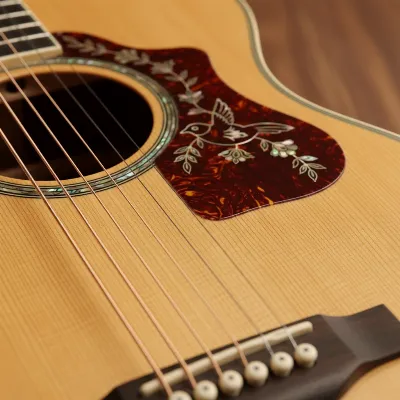 Close-up of Epiphone Hummingbird body showcasing spruce top and mahogany back/sides, highlighting the wood grain and rosette details.
Sound and Playability: Does it Sing?
When it comes to the acoustic tone, the Epiphone Hummingbird generally delivers a bright, crisp, and vibrant sound with impressive volume and projection. Players often describe its voice as clear and articulate, making it suitable for a wide range of genres, from country and rock to folk and blues. While the Studio model offers a robust and satisfying acoustic experience, some reviews note it can occasionally exhibit a slightly “boxy” quality in the low-mids, potentially due to its thicker finish. The Inspired by Gibson model, with its all-solid construction, tends to achieve a more open, resonant, and balanced tone, closely approximating the revered voice of its Gibson sibling.
For those considering the electro-acoustic versions, the Epiphone Hummingbird typically incorporates Fishman Presys or Sonitone undersaddle piezo systems. These electronics are highly functional, offering serviceable amplified sound for live performances, busking, or studio recording. While piezo pickups can sometimes be associated with a certain “scratchiness,” the Fishman systems in the Hummingbird provide a clear and loud signal, with soundhole-mounted volume and tone controls allowing for quick adjustments. Rolling back the tone control slightly can help manage any excessive brightness when plugged in.
The playability of the Epiphone Hummingbird is frequently praised, especially given its price point. The comfortable neck profiles, whether SlimTaper D or Rounded C, facilitate easy fretboard navigation for both rhythm and lead playing. While some players find the factory action (string height) perfect out of the box, others might prefer a professional setup to lower it to their personal preference, enhancing comfort and speed. The fretwork is generally well-executed, contributing to a smooth playing experience free from sharp edges or buzzing. This combination of comfortable feel and clear, projected sound makes the Epiphone Hummingbird a joy to play for musicians of all skill levels.
Epiphone Hummingbird vs. The Competition: Value Proposition
The most significant comparison for the Epiphone Hummingbird is inevitably its big brother, the Gibson Hummingbird. The Gibson version, a true icon, comes with a substantial price tag. The Epiphone, in all its iterations, offers a remarkable alternative, making the iconic Hummingbird look and a significant portion of its tonal character accessible to a much broader audience. It successfully captures the “vibe” and aesthetic appeal of the original at a fraction of the cost, making it an excellent choice for those who admire the Gibson but have budget constraints.
Within its own price segment, the Epiphone Hummingbird stands out. The Studio model, often priced under $500, frequently outperforms many competitors in terms of build quality, aesthetics, and overall sound for the money. Its solid spruce top is a major advantage, as many guitars in this range feature all-laminate construction. The Inspired by Gibson Hummingbird, while more expensive than the Studio, still represents exceptional value for an all-solid wood instrument. It competes effectively with models from other brands in the mid-range acoustic market, offering a blend of classic design, quality materials, and impressive tone that is hard to beat.
> “The Epiphone Hummingbird’s ability to deliver such iconic aesthetics and a genuinely pleasing acoustic tone at its price point is truly impressive. It’s a testament to how far accessible guitars have come.” – John Smith, Acoustic Guitar Luthier
Buying Guide: Finding Your Perfect Hummingbird
Choosing the right Epiphone Hummingbird involves considering your individual needs and budget. Start by defining your purpose for the guitar: Are you a beginner needing a reliable practice instrument, an intermediate player seeking a stage-ready electro-acoustic, or an enthusiast wanting the closest experience to a Gibson without the premium price? Your budget will naturally guide you towards the Studio model for exceptional entry-to-mid-level value or the Inspired by Gibson for an all-solid wood upgrade.
Several key factors warrant close inspection. Pay attention to the body style; the dreadnought shape offers powerful projection, but ensure it feels comfortable against your body. Consider the tonewoods: a solid spruce top is a must-have for evolving tone, and decide if layered or solid mahogany back and sides align with your tonal preferences and budget. If you plan to perform, opt for a model with integrated electronics. Crucially, evaluate the neck profile – the SlimTaper D or Rounded C should feel comfortable in your hand. Always check the details like the tuning machines (Grover tuners are a plus for stability), the bridge, and the frets for any imperfections.
When deciding where to buy, authorized Epiphone dealers often provide excellent customer service and setups. Buying online offers convenience and competitive pricing, but be sure to check return policies thoroughly. If possible, try playing the guitar in person before purchasing, as each instrument has its unique voice and feel.
Essential Accessories for Your Acoustic Guitar
Once you’ve chosen your Epiphone Hummingbird, a few essential accessories will enhance your playing experience and help maintain your instrument.
- Picks (Plectrums): Experiment with different materials, shapes, and thicknesses to find what best suits your playing style and desired tone. A variety pack is a great start.
- Capo: An indispensable tool for changing keys quickly without altering your fingerings, opening up new melodic possibilities.
- Tuner: A digital tuner, whether clip-on or pedal-based, is crucial for keeping your guitar in perfect pitch. Many modern Epiphone electro-acoustics have built-in tuners within their preamp systems.
- Strings: High-quality acoustic guitar strings can significantly impact your guitar’s tone and playability. Phosphor bronze strings are a popular choice for their warmth and clarity.
- Gig Bag or Hard Case: Protect your investment from bumps, scratches, and environmental changes. A gig bag offers portability, while a hard case provides maximum protection.
- Guitar Stand: A stand keeps your guitar safely accessible and displayed, encouraging more frequent playing.
Conclusion
The Epiphone Hummingbird Acoustic Guitar consistently proves itself to be a remarkable instrument, offering an alluring blend of iconic aesthetics, robust sound, and impressive playability at an accessible price point. Whether you opt for the budget-friendly yet capable Studio model or the all-solid wood excellence of the Inspired by Gibson version, you are investing in a guitar that embodies a rich legacy. It’s a versatile companion for songwriters, performers, and hobbyists alike, ready to deliver its characteristic bright, crisp, and resonant tone. The Epiphone Hummingbird doesn’t just look the part; it sings its own beautiful song, making the dream of owning this legendary design a tangible reality for countless musicians. What melodies will your Epiphone Hummingbird help you discover?
Frequently Asked Questions
What is the main difference between the Epiphone Hummingbird Studio and the Inspired by Gibson Hummingbird?
|
Our Picks for the Best Acoustic Guitar in 2026
As an Amazon Associate I earn from qualifying purchases.
|
||
| Num | Product | Action |
|---|---|---|
| 1 | Ashthorpe 41-inch Beginner Cutaway Acoustic Guitar Package (Sunburst), Full Size Basic Starter Kit w/Gig Bag, Strings, Strap, Tuner, Picks |

|
| 2 | Moukey 38" Acoustic Guitar for Beginners Kids Youth Adult Dreadnought Guitarra Acustica Kit with Chord Poster, Gig Bag, Tuner, Picks, Nylon Strings, Capo, Strap - Black |
|
| 3 | 38inch Wood Acoustic Guitar for Adults, 6 Steel-String Acoustic Guitar With Guitar Bag, Elementary Tutorial of Folk Guitar for Beginners. |
|
| 4 | Fender FA-25N 3/4 Size Nylon String Acoustic Guitar, Beginner Guitar, with 2-Year Warranty, Perfect Beginner Guitar for Kids that is Easy on Fingers, Includes 3 Months of Free Lessons, Natural |
|
| 5 | Yamaha JR1 FG Junior 3/4 Size Acoustic Guitar, Natural |
|
| 6 | Pyle Beginner Acoustic Guitar Kit, 3/4 Junior Size All Wood Instrument with Full Accessory Kit, Picks, Shoulder Strap, Carry Case, Cleaning Cloth, Tuner App, 2 Month Lessons, 36” (Natural Gloss) |
|
| 7 | Joymusic 38 inch sunburst beginner acoustic guitar kit,bundle with a strap with picks holder,digital tuner, set strings, capo,cleaning cloth,6 picks,gig bag.(JG-38C,3TS) |
|
| 8 | Ashthorpe 38-inch Beginner Acoustic Guitar Package (Blue), Basic Starter Kit w/Gig Bag, Strings, Strap, Tuner, Pitch Pipe, Picks |
|
| 9 | Joymusic 38 inch brown beginner acoustic guitar kit,bundle with a strap with picks holder,digital tuner, set strings, capo,cleaning cloth,6 picks,gig bag.(JG-38C,BR) |
|
| 10 | Joymusic 38 inch blueburst beginner acoustic guitar kit,bundle with a strap with picks holder,digital tuner, set strings, capo,cleaning cloth,6 picks,gig bag.(JG-38C,BLS) |
|
The primary difference lies in their construction. The Studio model typically features a solid spruce top with layered mahogany back and sides, making it more affordable. In contrast, the Inspired by Gibson Hummingbird boasts an all-solid wood build, with a solid Sitka spruce top and solid mahogany back and sides, offering enhanced resonance and a tone closer to the original Gibson model.
Is the Epiphone Hummingbird a good guitar for beginners?
Yes, the Epiphone Hummingbird, particularly the Studio model, is often recommended for beginners. Its comfortable neck profiles, generally good playability, and inspiring aesthetic make it an encouraging instrument for new players. While a professional setup might occasionally be beneficial to optimize action, it offers excellent value and sound quality to start your musical journey.
Do Epiphone Hummingbirds come with electronics?
Many Epiphone Hummingbird models, especially the Studio (formerly Pro) and Inspired by Gibson electro-acoustic versions, come equipped with built-in electronics. These often include Fishman undersaddle piezo pickups with soundhole-mounted volume and tone controls, making them ready for amplification for live performances or recording.
What kind of sound can I expect from an Epiphone Hummingbird?
The Epiphone Hummingbird is known for its bright, crisp, and vibrant acoustic tone with good projection and volume. Its square-shouldered dreadnought body contributes to a strong bass response and overall balanced sound, making it suitable for strumming and fingerpicking across various musical genres.
How does the Epiphone Hummingbird compare to the Gibson Hummingbird?
The Epiphone Hummingbird aims to replicate the iconic look and a significant portion of the tone of the much more expensive Gibson Hummingbird. While the Gibson typically uses higher-grade materials and craftsmanship, the Epiphone offers an exceptional value alternative, providing a highly playable and great-sounding instrument that captures the essence of the original at a fraction of the cost.
Frequently Asked Questions
What is the main difference between the Epiphone Hummingbird Studio and the Inspired by Gibson Hummingbird?
The primary difference lies in their construction. The Studio model typically features a solid spruce top with layered mahogany back and sides, making it more affordable. In contrast, the Inspired by Gibson Hummingbird boasts an all-solid wood build, with a solid Sitka spruce top and solid mahogany back and sides, offering enhanced resonance and a tone closer to the original Gibson model.
Is the Epiphone Hummingbird a good guitar for beginners?
Yes, the Epiphone Hummingbird, particularly the Studio model, is often recommended for beginners. Its comfortable neck profiles, generally good playability, and inspiring aesthetic make it an encouraging instrument for new players. While a professional setup might occasionally be beneficial to optimize action, it offers excellent value and sound quality to start your musical journey.
Do Epiphone Hummingbirds come with electronics?
Many Epiphone Hummingbird models, especially the Studio (formerly Pro) and Inspired by Gibson electro-acoustic versions, come equipped with built-in electronics. These often include Fishman undersaddle piezo pickups with soundhole-mounted volume and tone controls, making them ready for amplification for live performances or recording.
What kind of sound can I expect from an Epiphone Hummingbird?
The Epiphone Hummingbird is known for its bright, crisp, and vibrant acoustic tone with good projection and volume. Its square-shouldered dreadnought body contributes to a strong bass response and overall balanced sound, making it suitable for strumming and fingerpicking across various musical genres.
How does the Epiphone Hummingbird compare to the Gibson Hummingbird?
The Epiphone Hummingbird aims to replicate the iconic look and a significant portion of the tone of the much more expensive Gibson Hummingbird. While the Gibson typically uses higher-grade materials and craftsmanship, the Epiphone offers an exceptional value alternative, providing a highly playable and great-sounding instrument that captures the essence of the original at a fraction of the cost.
How to Choose Your Perfect Epiphone Hummingbird
Choosing the right Epiphone Hummingbird involves considering your individual needs, budget, and key guitar features to ensure it aligns with your playing style and preferences.
Determine if you need a beginner practice instrument, a stage-ready electro-acoustic, or an enthusiast's model close to a Gibson. Your budget will guide you towards the Studio model (under $500) or the Inspired by Gibson for an all-solid wood upgrade.
Pay attention to the body style, ensuring the dreadnought shape feels comfortable. Evaluate tonewoods, prioritizing a solid spruce top for evolving tone, and decide between layered or solid mahogany back and sides based on your tonal preferences and budget.
If performing, opt for models with integrated electronics like Fishman systems. Crucially, evaluate the neck profile (SlimTaper D or Rounded C) to ensure it feels comfortable in your hand for extended playing sessions.
Always check details like tuning machines (Grover tuners are a plus), the bridge, and frets for imperfections. Purchase from authorized Epiphone dealers for service or online with thorough return policies; try playing in person if possible.

I’ve been eyeing a Hummingbird for ages but the Gibson was always out of my price range. The ‘Inspired by Gibson’ Epiphone version is truly fantastic. It has that classic square-shouldered dreadnought look and the sound is surprisingly rich and full. Definitely worth the investment for a singer-songwriter like me.
Wow, what a guitar! I was looking for something with a bright, crisp, and vibrant tone and the Epiphone Hummingbird delivers. It’s become my go-to for practice and even some open mic nights. The build quality feels really solid too. Highly recommend it if you want that classic sound without breaking the bank.
I got the Epiphone Hummingbird after hearing good things about its projection. While it does have good volume, I found the bass response a little lacking compared to some other dreadnoughts I’ve played. It’s not bad, just not as resonant as I hoped for the lower notes. Still, it’s a decent guitar for general use.
I picked up the Epiphone Hummingbird Studio model a few months ago and I’m really happy with it. The volume and projection are great, especially for strumming. My only minor complaint is that the action was a little high out of the box, but a quick setup fixed that right up. It’s a solid guitar for the price.