The best acoustic guitars for beginners in 2026 balance playability, tone, durability, and affordability, with top recommendations including the Taylor GS Mini-e Mahogany, Yamaha FG800, and Fender CD-60S Dreadnought. These models typically range from $200 to $800, offering features like solid spruce tops and comfortable neck profiles that inspire new players to practice and progress without significant financial strain.
Understanding Acoustic Guitar Body Styles and Tonewoods
The design and materials of an acoustic guitar significantly influence its sound, playability, and overall feel. Knowing these fundamentals is key to finding an instrument that resonates with your personal style and comfort.
Popular Acoustic Guitar Body Styles
A guitar’s body shape and size play a crucial role in its acoustic projection and how comfortable it feels to play. Different shapes cater to various playing styles and physical builds.
- Dreadnought: This iconic shape is known for its strong volume, deep bass, and well-balanced tone. Dreadnoughts are versatile for strumming and flatpicking across genres like folk, country, and rock, but their larger size can be cumbersome for smaller players.
- Grand Auditorium (GA): A popular choice between dreadnought and concert-sized guitars, the Grand Auditorium offers a balanced tone suitable for both strumming and fingerstyle. Its narrower waist and shallower body depth make it more comfortable than a dreadnought.
- Parlor: Characterized by its small, compact body, the parlor guitar delivers a focused, punchy sound with strong mid-range presence. It’s cherished by fingerstyle players and those seeking a comfortable, portable instrument, also excellent for younger players.
- Jumbo: As its name suggests, a jumbo guitar boasts a large, rounded body, producing immense volume and a rich, resonant sound with deep lows. They are favored by strummers needing a powerful voice.
- Travel/Concert Guitars: These smaller-bodied guitars, including 3/4 size models, are designed for portability and comfort. They are ideal for beginners, younger players, or those with smaller hands, making them easier to handle.
Tonewoods: The Heart of Acoustic Sound
The type of wood used to construct an acoustic guitar, especially for the top, back, and sides, profoundly impacts its tonal characteristics. These “tonewoods” are a significant factor in a guitar’s voice.
- Solid Wood: Guitars made with solid wood tops, backs, and sides feature single pieces of wood, often spruce for the top and mahogany or rosewood for the back and sides.
- Advantages: Solid wood resonates more freely, producing a richer, more complex tone with greater depth and sustain. These guitars tend to “open up” over time, meaning their sound improves with age and play, developing more nuance and character. They offer a wider dynamic range.
- Disadvantages: Solid wood guitars are generally more expensive and more susceptible to changes in humidity and temperature, requiring more care and often a humidifier.
- Common Types:
- Spruce: A popular choice for guitar tops, known for its bright, clear, and articulate tone. It offers excellent projection and a wide dynamic range.
- Mahogany: Often used for backs and sides, mahogany delivers a warm, punchy sound with strong mid-range presence, contributing to a direct and focused tone.
- Rosewood: Prized for its deep, resonant sound with rich overtones and extended sustain, typically used for backs and sides, adding complexity.
- Sapele/Okoume: Often used as sustainable alternatives to mahogany, offering similar warm and balanced tonal characteristics at a more accessible price point.
- Laminate Wood: Laminate guitars are constructed by layering thin sheets of wood, sometimes with a veneer of tonewood on the surface.
- Advantages: Laminate guitars are more affordable and significantly more resistant to fluctuations in temperature and humidity, making them highly durable and a great choice for beginners, travel, or outdoor playing.
- Disadvantages: While they offer a pleasing sound, laminate guitars generally do not possess the same level of tonal complexity, richness, or dynamic range as solid wood instruments. They also tend not to “age” or improve in tone over time.
“The initial choice between solid and laminate often comes down to budget and environmental resilience. For a beginner, a guitar with a solid top offers a fantastic balance of rich tone and affordability, providing an instrument that can truly grow with them.” – Alex Stone, Senior Luthier, String Theory Guitars
Comparing Top Acoustic Guitar Brands for Beginners
When selecting an acoustic guitar, brand reputation often signifies a commitment to quality, playability, and sound. Here’s a comparison of some prominent brands that consistently offer excellent options for beginners:
| Brand | Quality of Sound (Beginner Models) | Durability | Price Range (Beginner Models) | Design Aesthetics | Support & Warranty |
|---|---|---|---|---|---|
| Taylor | Clear, balanced, articulate | High | Mid-High ($400-$1000+) | Modern, clean, refined | Excellent |
| Martin | Rich, warm, traditional | High | Mid-High ($400-$1000+) | Classic, understated | Excellent |
| Yamaha | Balanced, consistent, versatile | Very High | Low-Mid ($200-$600) | Traditional, functional | Very Good |
| Fender | Bright, punchy, well-defined | Good | Low-Mid ($200-$500) | Classic, familiar | Good |
| Gibson | Warm, resonant, iconic | High | High ($1000+) | Vintage, distinct | Good |
- Taylor: Known for exceptional playability and clear, articulate tone. Taylor’s Academy and GS Mini series are highly recommended for beginners, offering comfortable playing and professional sound in compact packages.
- Martin: A legendary name, Martin guitars are revered for their rich, warm, and powerful tone. Their X Series and Little Martin models provide beginners with that quintessential Martin sound and quality at more approachable price points.
- Yamaha: Consistently praised for outstanding value, Yamaha offers incredibly well-built guitars with excellent sound and playability for their price. Models like the FG and FS series are staples for beginners, known for consistency and robust build quality.
- Fender: While famous for electric guitars, Fender also produces reliable and affordable acoustic instruments. Their CD and FA series are popular entry-level options, offering comfortable necks and a bright, clear tone suitable for various styles.
- Gibson: Typically associated with high-end, professional instruments, Gibson acoustics offer a distinct, warm, and resonant sound. While their beginner options are fewer and generally at a higher price point, their commitment to craftsmanship is undeniable.
The Top 10 Best Acoustic Guitars for Beginners
Choosing the right beginner acoustic guitar means finding a balance of playability, tone, durability, and affordability. Here are our top 10 recommendations, designed to inspire new players without breaking the bank.
-
Taylor GS Mini-e MahoganyThe Taylor GS Mini-e Mahogany is a consistently top-ranked compact acoustic that defies its size with a remarkably full and rich sound. Its slightly shorter 23.5-inch scale length makes fretting chords significantly easier for new players or those with smaller hands. The mahogany top paired with layered sapele back and sides delivers a warm, balanced tone and excellent durability, while the “e” designation means it comes equipped with Taylor’s ES-B electronics for easy amplification. This model is an investment that will grow with any aspiring guitarist.
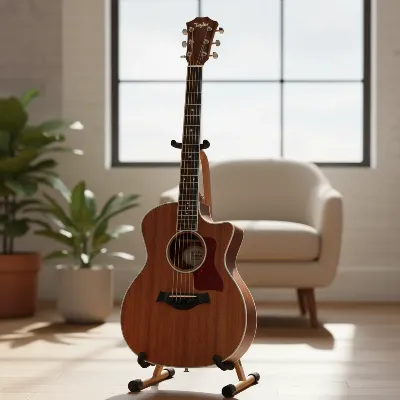 Taylor GS Mini-e Mahogany acoustic guitar on a stand, highlighting its compact size and beautiful wood grain.
 -
Yamaha FG800 / FG800JThe Yamaha FG800 is a legendary dreadnought that continues to be a go-to recommendation for beginners. It features a solid Sitka spruce top, delivering a bright, clear, and resonant tone that projects beautifully. The “J” variant indicates a slightly plainer finish but retains the same excellent playability and sound quality. Its comfortable neck profile and consistent build quality ensure a rewarding learning experience, offering robust volume and a full low end suitable for strumming and basic fingerpicking.
-
Fender CD-60S DreadnoughtThe Fender CD-60S stands out as a superb value dreadnought, balancing affordability with impressive tone and comfort. It boasts a solid spruce top, providing brightness and clarity, complemented by mahogany back and sides for warmth and balance. The “Easy-to-Play” neck profile, designed with rolled fretboard edges, ensures a comfortable feel for new players. This guitar is a reliable choice for strummers and singer-songwriters, offering a bold projection for its price point.
-
Martin D-X2EFor beginners seeking the iconic Martin sound and craftsmanship, the D-X2E offers a premium entry point. This dreadnought model features a solid Sitka spruce top combined with HPL (High-Pressure Laminate) back and sides, making it durable and less sensitive to environmental changes. It delivers a rich, resonant tone characteristic of Martin guitars, and includes Fishman MX electronics for versatile plugged-in performance. Its comfortable neck and playability make it an excellent choice for serious learners.
-
Epiphone DR-100 / Dove StudioEpiphone, with its storied history, offers fantastic beginner options like the DR-100 and the more stylized Dove Studio. The DR-100 is a no-frills dreadnought known for its reliable build and straightforward tone, making it a solid budget-friendly starter. The Dove Studio, inspired by its Gibson counterpart, adds a distinctive aesthetic with its solid spruce top and iconic dove pickguard, offering a warm and articulate sound alongside an inspiring visual presence.
-
Ibanez AW54CE DreadnoughtThe Ibanez AW54CE provides a unique tonal option with its all-Okoume wood construction (solid Okoume top with Okoume back and sides). This tonewood combination produces a wonderfully warm, woody, and resonant sound, distinct from the brighter spruce-topped guitars. The “CE” indicates a cutaway body for easier access to higher frets and onboard Ibanez AEQ-TP2 preamp with a tuner, making it an excellent electro-acoustic option for aspiring performers.
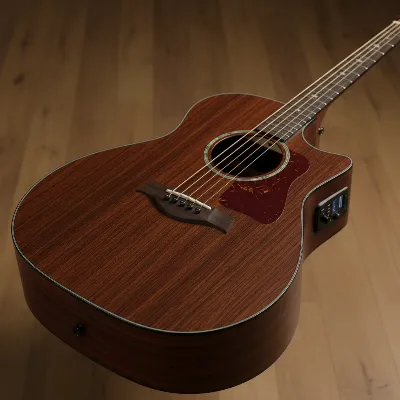 Ibanez AW54CE dreadnought acoustic-electric guitar, showcasing its dark, warm Okoume wood finish.
 -
Eastman PCH2-D DreadnoughtEastman guitars are gaining a reputation for offering exceptional value, often providing features found in much more expensive instruments. The PCH2-D dreadnought features a solid torrefied Sitka spruce top, which enhances resonance and gives it a vintage-like opened-up tone from day one. With a bone nut and saddle, rosewood fretboard and bridge, and excellent construction, it offers a surprisingly rich and detailed sound for its accessible price.
-
Taylor BT1 ‘Baby Taylor’The Baby Taylor BT1 is an ideal travel guitar and a fantastic option for young beginners or adults who prefer a smaller, more manageable instrument. Its compact 3/4 size makes it incredibly comfortable to hold and play, featuring a solid Sitka spruce top for a clear, surprisingly robust tone. The short scale length reduces string tension, making chords and notes easier on the fingers. It’s a high-quality instrument that encourages regular practice due to its effortless playability.
-
Yamaha JR1 FG 3/4For those on a tighter budget seeking a 3/4 size guitar, the Yamaha JR1 FG is an excellent choice. It’s a scaled-down version of Yamaha’s popular FG series, offering solid playability and a decent tone for its price. With a spruce top and meranti back and sides, it’s durable and delivers a bright, clear sound that is perfect for young learners or as a convenient travel companion. It often comes bundled with essential accessories, providing an immediate starter kit.
-
Cordoba C5 Classical GuitarWhile steel-string acoustics are popular, the Cordoba C5 is an outstanding classical (nylon-string) guitar perfect for beginners interested in softer tones, fingerstyle, or classical music. Its solid Canadian cedar top and mahogany back and sides produce a warm, rich, and resonant sound. Nylon strings are gentler on fingertips, making the initial learning phase more comfortable, and its traditional body shape and comfortable neck provide a beautiful playing experience.
Buying Guide: How to Choose Your First Acoustic Guitar
Selecting your first acoustic guitar is a personal journey. Here’s a guide to help you make an informed decision and find the instrument that feels right for you.
Determine Your Needs and Budget
|
Our Picks for the Best Acoustic Guitar in 2026
As an Amazon Associate I earn from qualifying purchases.
|
||
| Num | Product | Action |
|---|---|---|
| 1 | 38inch Wood Acoustic Guitar for Adults, 6 Steel-String Acoustic Guitar With Guitar Bag, Elementary Tutorial of Folk Guitar for Beginners. |

|
| 2 | Joymusic 38 inch brown beginner acoustic guitar kit,bundle with a strap with picks holder,digital tuner, set strings, capo,cleaning cloth,6 picks,gig bag.(JG-38C,BR) |
|
| 3 | Yamaha JR1 FG Junior 3/4 Size Acoustic Guitar, Natural |
|
| 4 | Fender FA-25N 3/4 Size Nylon String Acoustic Guitar, Beginner Guitar, with 2-Year Warranty, Perfect Beginner Guitar for Kids that is Easy on Fingers, Includes 3 Months of Free Lessons, Natural |
|
| 5 | Moukey 38" Acoustic Guitar for Beginners Kids Youth Adult Dreadnought Guitarra Acustica Kit with Chord Poster, Gig Bag, Tuner, Picks, Nylon Strings, Capo, Strap - Black |
|
| 6 | Ashthorpe 38-inch Beginner Acoustic Guitar Package (Blue), Basic Starter Kit w/Gig Bag, Strings, Strap, Tuner, Pitch Pipe, Picks |
|
| 7 | Joymusic 38 inch blueburst beginner acoustic guitar kit,bundle with a strap with picks holder,digital tuner, set strings, capo,cleaning cloth,6 picks,gig bag.(JG-38C,BLS) |
|
| 8 | Joymusic 38 inch sunburst beginner acoustic guitar kit,bundle with a strap with picks holder,digital tuner, set strings, capo,cleaning cloth,6 picks,gig bag.(JG-38C,3TS) |
|
| 9 | Ashthorpe 41-inch Beginner Cutaway Acoustic Guitar Package (Sunburst), Full Size Basic Starter Kit w/Gig Bag, Strings, Strap, Tuner, Picks |
|
| 10 | Pyle Beginner Acoustic Guitar Kit, 3/4 Junior Size All Wood Instrument with Full Accessory Kit, Picks, Shoulder Strap, Carry Case, Cleaning Cloth, Tuner App, 2 Month Lessons, 36” (Natural Gloss) |
|
Before diving into guitar models, consider what you want to achieve and what you’re willing to spend.
- Purpose: Are you looking to casually strum songs at home, perform at open mics, or take lessons? Your primary use will influence the type and features you need.
- Budget: Beginner acoustic guitars typically range from $200 to $800. While you can find cheaper options, investing between $400 and $700 often provides a significant leap in quality, playability, and tone, ensuring the guitar inspires you to keep playing. Guitars below $200 can sometimes suffer from poor tuning stability or uneven frets, making learning harder.
Key Factors to Consider
Once you have a budget, focus on these critical elements during your selection process.
- Body Style and Size: This is paramount for comfort. A guitar should feel natural when you hold it, whether sitting or standing. Smaller body styles like Concert, Grand Auditorium, or Parlor are often easier for beginners, especially those with smaller frames, to handle than larger Dreadnoughts or Jumbos.
- Tonewoods: A guitar with a solid spruce or mahogany top will generally offer a richer, more resonant tone than an all-laminate guitar. While all-solid wood guitars are pricier, a solid top with laminate back and sides offers a great balance of sound quality and durability for beginners.
- Neck Comfort and Action: The neck should feel comfortable in your hand, and the “action” (the height of the strings from the fretboard) should be relatively low. Low action makes pressing down on strings easier and reduces finger fatigue. A proper setup by a professional can optimize these aspects.
- Inspect Details: Before purchasing, examine the guitar for any visible flaws: check that the tuning pegs turn smoothly, frets are level and not sharp, and there’s no fret buzz when playing notes or chords.
Where to Purchase Your Guitar
The source of your purchase can be as important as the guitar itself.
- Reputable Music Stores: Buying from a local music store allows you to physically try out different guitars, compare sizes and sounds, and get personalized advice from knowledgeable staff. Many stores also offer a free setup with purchase.
- Online Retailers: Online stores often have competitive prices and a wider selection. However, it’s crucial to check their return policies and consider getting the guitar professionally set up upon arrival, as factory setups can vary.
Essential Accessories for Your Acoustic Guitar
Once you have your acoustic guitar, a few essential accessories will enhance your playing experience, protect your instrument, and keep you sounding great.
- Picks: Guitar picks come in various thicknesses and materials. Thinner picks are good for strumming, while thicker ones are better for single-note lines and lead playing. Experiment to find what feels comfortable for your style.
- Capo: A capo is a small device that clamps onto the guitar neck, raising the pitch of all strings. It allows you to play songs in different keys using the same chord shapes, making it incredibly versatile for vocalists and learning new songs.
- Tuner: Essential for every guitarist, a tuner ensures your guitar is always in perfect pitch. Clip-on tuners are popular for their convenience, attaching directly to the headstock and sensing vibrations to accurately detect pitch.
- Extra Strings: Strings break, and they also lose their brightness over time. Having a spare set of acoustic guitar strings (typically light or extra-light gauge for beginners) is crucial. Phosphor bronze strings are a common choice for a warm, balanced tone.
- Gig Bag or Case: To protect your investment, a gig bag or hard case is vital. Gig bags offer lightweight protection for carrying your guitar to lessons or friends’ houses, while hard cases provide superior protection against impacts and environmental changes, especially for solid wood guitars.
- Guitar Stand: A guitar stand keeps your instrument safely upright and easily accessible, encouraging more frequent practice than if it were tucked away in a case. You can choose between floor stands or wall mounts.
- Strap: If you plan to play standing up, a comfortable guitar strap is essential. Ensure your guitar has strap buttons (most modern acoustics do) for secure attachment.
- Humidifier (optional, for solid wood guitars): For guitars with solid wood components, especially in dry climates, a soundhole humidifier can prevent the wood from drying out, cracking, and warping, preserving your guitar’s tone and longevity.
Conclusion
Choosing your first acoustic guitar is a significant step, but with the right guidance, it can be a smooth and exciting process. By understanding different body styles, tonewoods, and what reputable brands offer, you can find an acoustic guitar that fits your budget, feels comfortable, and inspires you to play for years to come. Whether you opt for the versatile Taylor GS Mini, the reliable Yamaha FG800, or a classic Fender CD-60S, the key is to choose an instrument that genuinely excites you and makes you want to pick it up every day.
What music are you most excited to learn and play on your new acoustic guitar?
Frequently Asked Questions
What is the best acoustic guitar for small hands in 2026?
For small hands, guitars with a shorter scale length and smaller body are ideal. The Taylor GS Mini-e Mahogany and the Baby Taylor BT1 are excellent choices, as are 3/4 size models like the Yamaha JR1 FG. These guitars reduce string tension and make reaching frets much easier, significantly improving comfort for beginners.
How much should a beginner spend on an acoustic guitar?
A good budget for a beginner acoustic guitar typically falls between $400 and $700. This range ensures a quality instrument with better playability, tone, and durability compared to cheaper models, without being overly expensive. Investing in this range can prevent frustration and keep you motivated to learn.
Is a solid top acoustic guitar worth it for a beginner?
Yes, a solid top acoustic guitar is generally worth the investment for a beginner. A solid spruce or mahogany top offers richer, more resonant tone and improves with age. While laminate guitars are durable, a solid top provides superior sound quality that can motivate new players and sustain their interest in the instrument.
What is the easiest acoustic guitar body shape for beginners to play?
Smaller body shapes like Concert, Parlor, or Grand Auditorium are often easiest for beginners to play. They are more comfortable to hold and reach around than larger Dreadnoughts or Jumbos. Travel-sized guitars (like the Baby Taylor) are also very beginner-friendly due to their compact dimensions.
Do I need to buy all the accessories right away?
While not all accessories are strictly necessary on day one, a tuner, a few picks, and a gig bag are highly recommended immediately. A capo, extra strings, and a stand can be added shortly after. A humidifier is important for solid wood guitars in dry conditions to protect the instrument long-term.
Frequently Asked Questions
What is the best acoustic guitar for small hands?
For small hands, guitars with a shorter scale length and smaller body are ideal. The Taylor GS Mini-e Mahogany and the Baby Taylor BT1 are excellent choices, as are 3/4 size models like the Yamaha JR1 FG. These guitars reduce string tension and make reaching frets much easier, significantly improving comfort for beginners.
How much should a beginner spend on an acoustic guitar?
A good budget for a beginner acoustic guitar typically falls between $400 and $700. This range ensures a quality instrument with better playability, tone, and durability compared to cheaper models, without being overly expensive. Investing in this range can prevent frustration and keep you motivated to learn.
Is a solid top acoustic guitar worth it for a beginner?
Yes, a solid top acoustic guitar is generally worth the investment for a beginner. A solid spruce or mahogany top offers richer, more resonant tone and improves with age. While laminate guitars are durable, a solid top provides superior sound quality that can motivate new players and sustain their interest in the instrument.
What is the easiest acoustic guitar body shape for beginners to play?
Smaller body shapes like Concert, Parlor, or Grand Auditorium are often easiest for beginners to play. They are more comfortable to hold and reach around than larger Dreadnoughts or Jumbos. Travel-sized guitars (like the Baby Taylor) are also very beginner-friendly due to their compact dimensions.
Do I need to buy all the accessories right away?
While not all accessories are strictly necessary on day one, a tuner, a few picks, and a gig bag are highly recommended immediately. A capo, extra strings, and a stand can be added shortly after. A humidifier is important for solid wood guitars in dry conditions to protect the instrument long-term.
How to Choose Your First Acoustic Guitar
Selecting your first acoustic guitar involves considering your needs, budget, and key instrument features to find the perfect fit.
Before looking at models, decide your purpose for playing (e.g., casual strumming, lessons) and set a budget. Beginner guitars typically range from $200 to $800, with $400-$700 offering a good balance of quality and affordability.
Choose a guitar that feels comfortable to hold and play. Smaller body styles like Concert, Parlor, or Grand Auditorium are often easier for beginners, especially those with smaller frames, compared to larger Dreadnoughts.
Opt for a guitar with a solid spruce or mahogany top for richer tone. Ensure the neck feels comfortable and the string action is low to reduce finger fatigue. A professional setup can optimize these aspects.
Before buying, check for flaws like uneven frets or fret buzz. Purchase from a reputable music store to try guitars and get advice, or from online retailers with good return policies, considering a professional setup upon arrival.

As a complete beginner, I was overwhelmed by all the choices. Focusing on the body styles and tonewoods really helped me understand what I was looking for. I ended up with a concert-sized guitar, and it’s perfect for me. It’s easy to hold and has a bright, clear sound that I love.
The Fender CD-60S Dreadnought was my choice, and I’m pretty happy with it. It’s got a great full sound, and the solid spruce top really makes a difference. My only minor complaint is that the action was a little high out of the box, but a quick setup fixed that right up. For the $200-$800 range, it’s a solid buy.
I went with the Taylor GS Mini-e Mahogany, and while it sounds amazing and is super portable, I found it a bit pricey for a beginner. I know it’s a quality instrument, but I wish there were more options in the lower end of the recommended price range that still offered that comfortable neck profile. It’s a great guitar, just a bit of a splurge.
I picked up the Yamaha FG800 a few months ago after reading about it, and it’s been fantastic for learning. The tone is surprisingly rich for the price point, and the neck feels really comfortable for my smaller hands. It definitely makes practicing a lot more enjoyable and less frustrating than I expected for a beginner guitar.